

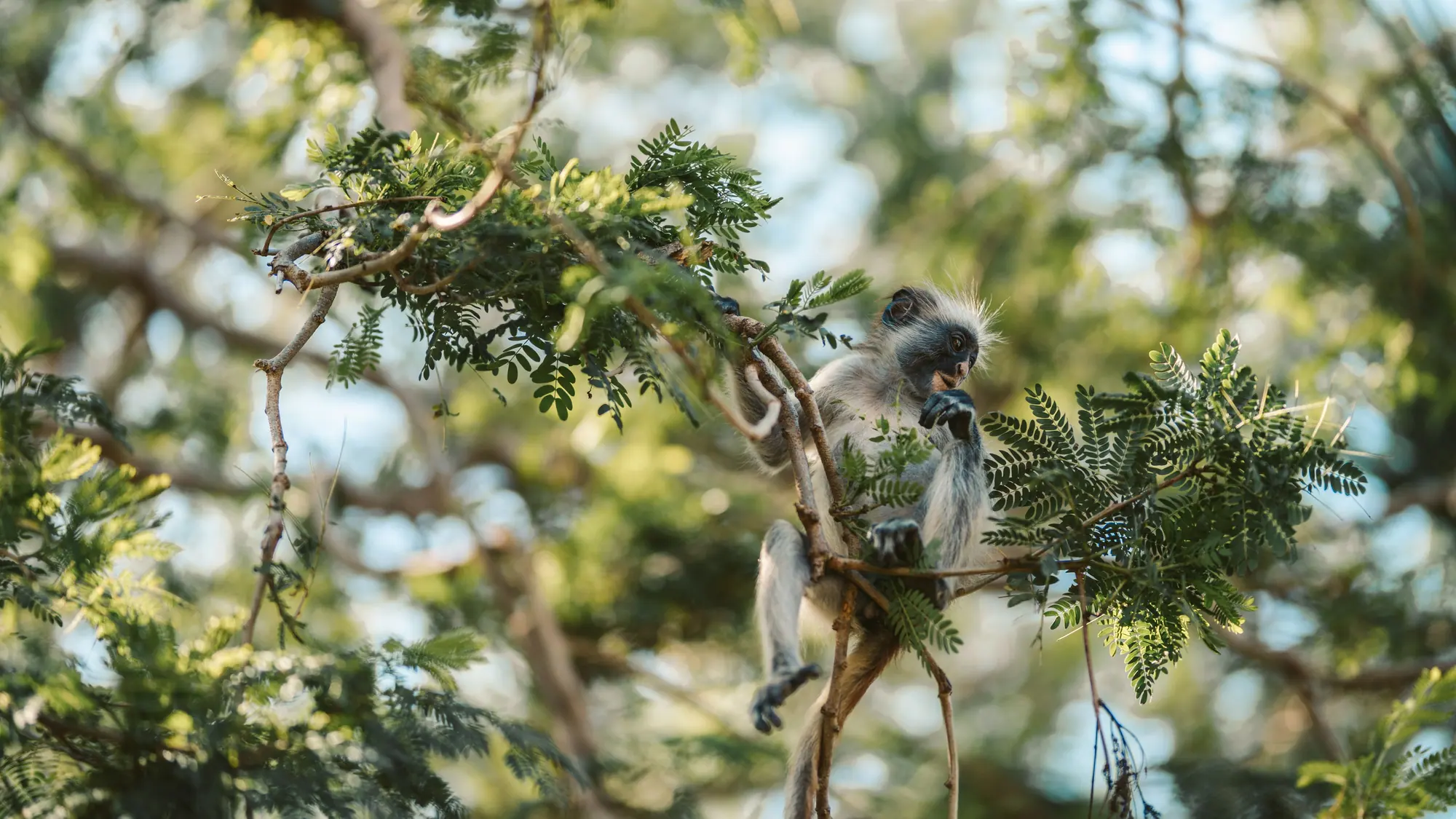
Zanzibar Red Colobus Monkey
The park's star species — endemic to Zanzibar and found nowhere else in the world. Small habituated troops are easily photographed on guided walks.
Zanzibar Archipelago
Zanzibar's only national park, protecting the endangered Zanzibar red colobus monkey, mangroves, tropical forests, and unique biodiversity.
In pictures
Overview
Jozani Chwaka Bay National Park is the island's last major stand of indigenous forest. A short guided walk brings you face-to-face with the endemic Zanzibar red colobus monkey, followed by a raised boardwalk through a lush mangrove ecosystem.
Highlights
Best time to visit
Dry season Jun – Oct offers the easiest walking
Early morning visits reward you with cooler temperatures and active wildlife.
How to get there
About 35 km / 45 min drive south-east from Stone Town.
Easy stop on the way to or from Paje, Jambiani or Michamvi.
Guided park entry is compulsory and included with most tour operators.
Jozani Forest National Park is Zanzibar's only national park and one of the island's most important conservation areas. Located in the heart of Unguja Island, it protects indigenous tropical forest, mangrove ecosystems, and rare wildlife, including the endemic Zanzibar red colobus monkey. It offers an enriching contrast to Zanzibar's beaches through guided nature walks and exceptional biodiversity.
Jozani is the best place to experience Zanzibar's natural heritage. Visitors observe endangered primates in their natural habitat, explore elevated mangrove boardwalks, discover medicinal plants, and learn about local conservation initiatives while enjoying a peaceful rainforest setting.
Why visit
Jozani offers a rare glimpse of Zanzibar's original ecosystem — indigenous rainforest, mangroves and the endemic red colobus monkey found nowhere else on earth.
Chapter one
Jozani Forest lies approximately 35 km southeast of Stone Town and can be reached in about 45-60 minutes by road. Now part of Jozani-Chwaka Bay National Park, it was gazetted to protect the last significant stand of indigenous forest on Unguja and the fragile mangrove systems of Chwaka Bay.
Community-based conservation programmes work with surrounding villages to protect the endemic Zanzibar red colobus monkey, whose population has recovered significantly since the park's creation.
Not to miss
The park's star species — endemic to Zanzibar and found nowhere else in the world. Small habituated troops are easily photographed on guided walks.
A raised wooden boardwalk winds through a tidal mangrove forest — a unique ecosystem and a highlight for birders and photographers.
Short guided walks (1-2 hours) through mahogany, palm and fig forest with an expert local guide.
Other primate species share the forest, along with bush babies at dusk.
Over 40 bird species plus a butterfly centre run by a nearby community project.
Guides interpret the traditional Swahili uses of dozens of forest plants.
Living heritage
Jozani is a model for community conservation — local villages share directly in park revenue and lead many of the guiding and research programmes.
Shopping
Must-try dishes
Where to stay
When to go
June – October
Dry season — the easiest walking conditions.
December – February
Warm and generally dry — good all-day visibility.
March – May
Long rains — the forest is at its most lush; bring waterproofs.
Early Morning
Best time for wildlife activity and cooler temperatures.
Plan your visit
Safari + beach
Jozani is an easy detour on the way to or from any east-coast beach.
Why Williamson
Williamson Adventures offers expertly guided Jozani Forest excursions with comfortable transportation, knowledgeable local guides, and tailor-made itineraries that combine nature, culture, beaches, and Tanzania safaris.
Good to know
Keep exploring

A UNESCO World Heritage Site, Stone Town is the cultural and historical heart of Zanzibar, blending African, Arab, Persian, Indian, and European influences.
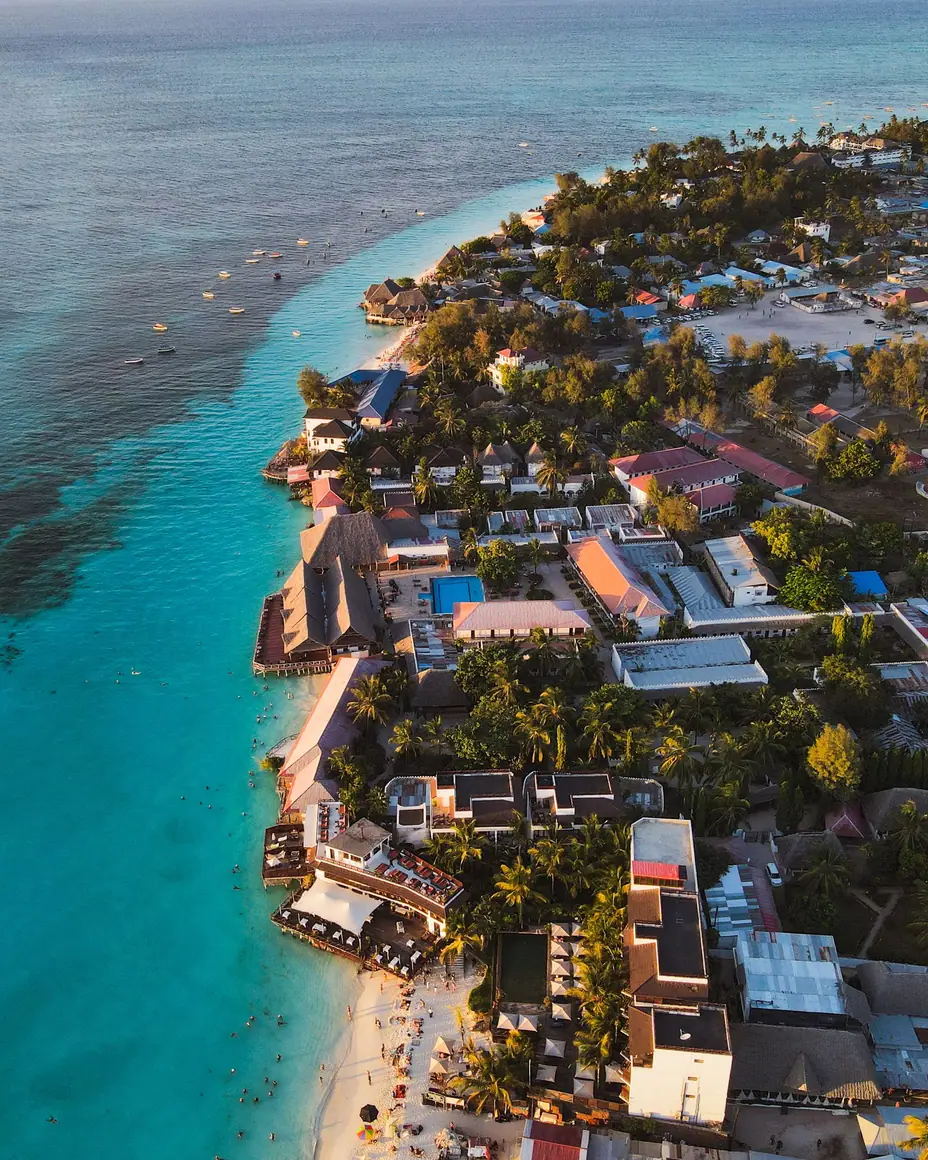
Zanzibar's premier beach destination, known for white-sand beaches, turquoise waters, luxury resorts, and year-round swimming.
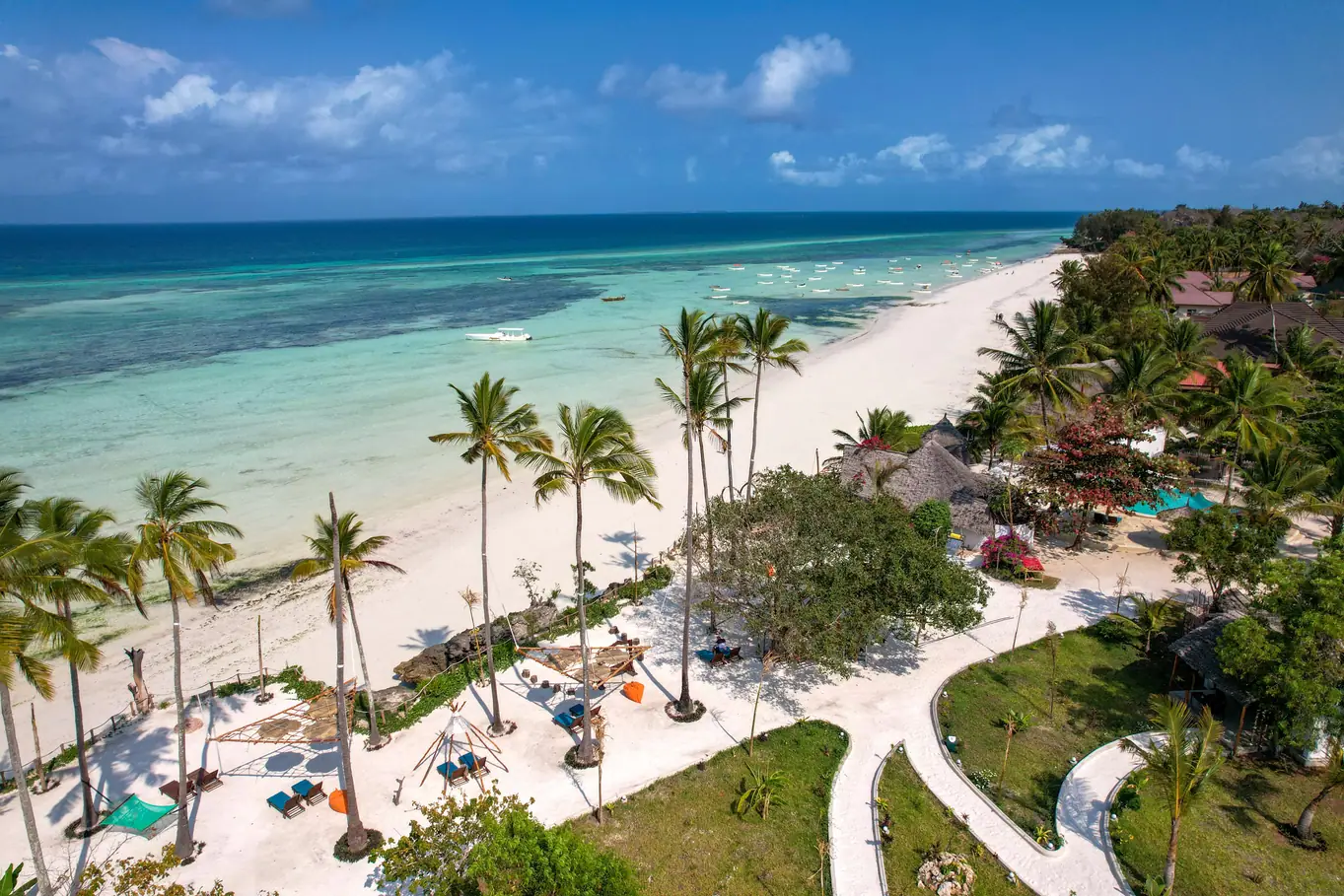
Kendwa Beach is celebrated for calm waters, spectacular sunsets, soft sand, and a relaxed yet lively coastal atmosphere.