

Kenya safari guide · 2026–27
Plan your Kenya safari, step by step
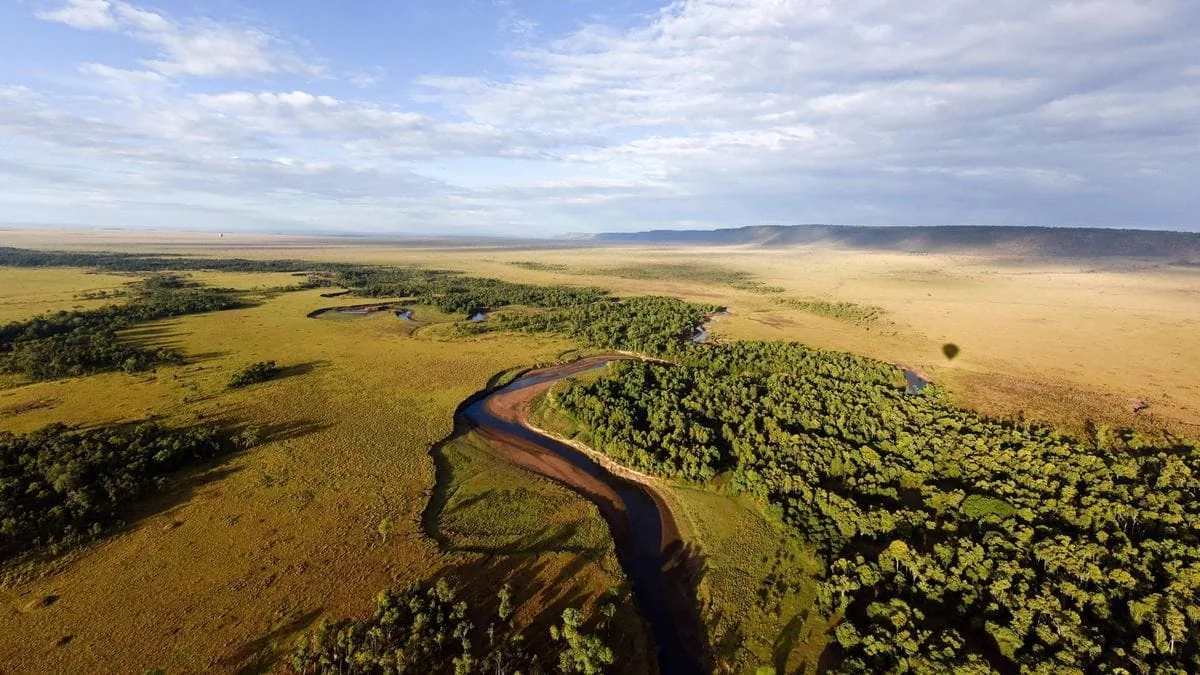
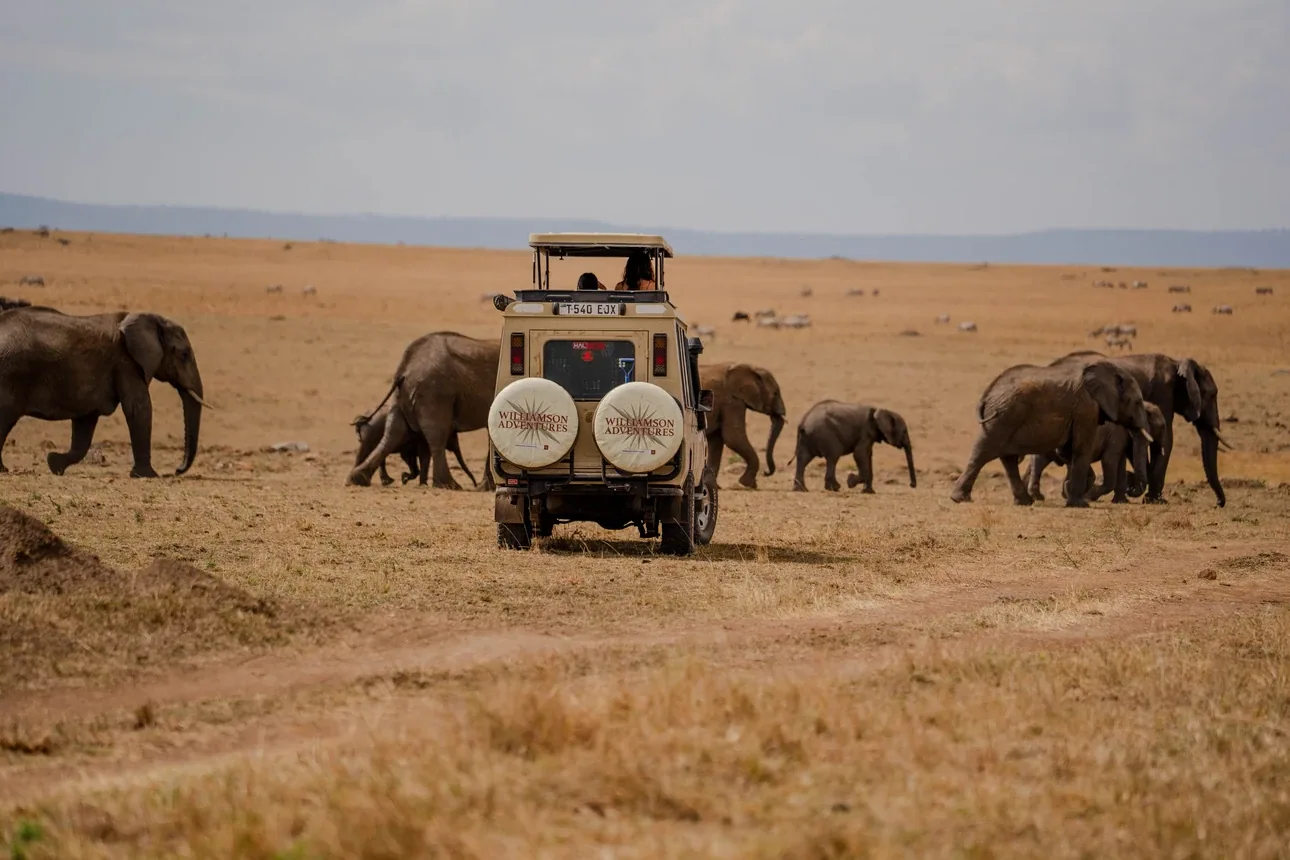
Kenya is where the word "safari" entered English, and it still delivers: lions on the Mara plains at dawn, elephants walking under Kilimanjaro in Amboseli, and reticulated giraffe in Samburu that you won't see further south. It is also easy to plan badly. Fees change, the Migration does not run to a timetable, and a cheap quote can hide eight-hour road transfers. This guide takes you through every decision in order.
Best for the Migration
July – October
Best value
Jan – Mar, June, Nov
Ideal length
7 – 14 days
Mara entry fee
USD 100–200 / day
Entry permit
eTA, apply online
Fly-in luggage
15 kg, soft bag
Fees and rules checked October 2026. Verify before travel.
How Williamson Adventures can help
Use this guide to plan on your own, or hand the planning to us at any stage. We design private, tailor-made safaris in Kenya and Tanzania, so we can tell you honestly whether Kenya, Tanzania or a combination suits your dates best.
What we take off your plate
- Choosing the right parks and camps for your month, budget and travel style
- Booking lodges, conservancy camps, internal flights and transfers in one itinerary
- Showing park and conservancy fees as separate, current lines in your quote
- A private vehicle and guide, so you set the pace at every sighting
- Pre-departure notes on the eTA, health, packing and the 15 kg luggage limit
- A contact you can reach before and during your trip
Booking with us in four steps
- 1
Tell us your plans
Use the form at the end of this page, WhatsApp, or email: dates, travellers, ages and the experiences you care about.
- 2
Talk it through
We answer your questions by WhatsApp, email or a call and suggest a route that fits your month.
- 3
Get your tailored quote
Every night, activity, flight and fee listed, plus our deposit and cancellation terms in writing.
- 4
Confirm and relax
Pay your deposit; we handle the bookings and send your pre-trip pack.
Planning timeline at a glance
For July–October travel, start 9–12 months out. For green season, 3–6 months is usually enough.
| When | What to do | Why it matters |
|---|---|---|
| 9–12 months | Pick your month, parks and budget tier; shortlist 2–3 operators | The best Mara conservancy camps sell out first for August and September |
| 8–10 months | Confirm itinerary, pay deposit, book international flights | Camps hold rooms only against a deposit |
| 6 months | Buy travel insurance with medical evacuation; check passport validity | Cancellation cover starts when you buy it |
| 90 days | Travel clinic appointment; start buying gear | Some vaccines need several weeks or two doses |
| 60 days | Pay the balance (usually due 60–90 days before travel) | Late payment can release your rooms |
| 30 days | Apply for your eTA; get cash for tips; confirm flight times | eTA processing is usually about 3 working days |
| 7 days | Pack, weigh your bag (15 kg fly-in), print documents | Light aircraft enforce the weight limit |
| Travel | Arrive Nairobi, rest one night, start safari | Avoids a game drive straight after an overnight flight |
Why Kenya, and how it compares with Tanzania
Kenya is the better first safari if you have a week or less, want short distances, and want to combine wildlife with a beach. Nairobi has the region's best flight connections, and the Maasai Mara is a 45-minute flight from the city.
Kenya's real advantage is its private conservancies. In Mara North, Naboisho or Olare Motorogi, camps limit vehicle numbers, and you can do night drives, walking safaris and off-road driving to sightings. Most national parks and reserves don't allow these.
Tanzania wins on scale. The Serengeti is roughly ten times the size of the Mara reserve, and the Ngorongoro Crater has no equivalent in Kenya. The two countries share one ecosystem, so many travellers combine them.
Not sure which fits your dates? We plan safaris in both countries and will tell you plainly which one suits your month better.
| Kenya | Tanzania | |
|---|---|---|
| Best for | Short trips, conservancies, beach combos | Long trips, vast parks, Ngorongoro |
| Migration months | July–October (Mara) | Dec–March calving (Ndutu); June–Oct in the north |
| Getting around | Short flights, shorter drives | Longer distances, more internal flights |
| Distinctive wildlife | Samburu Special Five, Ol Pejeta rhinos | Ngorongoro rhinos, tree-climbing lions |
Best time for a Kenya safari, month by month
Kenya has two rainy seasons: the long rains (roughly April–May) and the short rains (roughly November). Game viewing is good year-round; what changes is crowds, price and grass height.
Dry seasonShoulder seasonRainy season
August
Peak crossing season
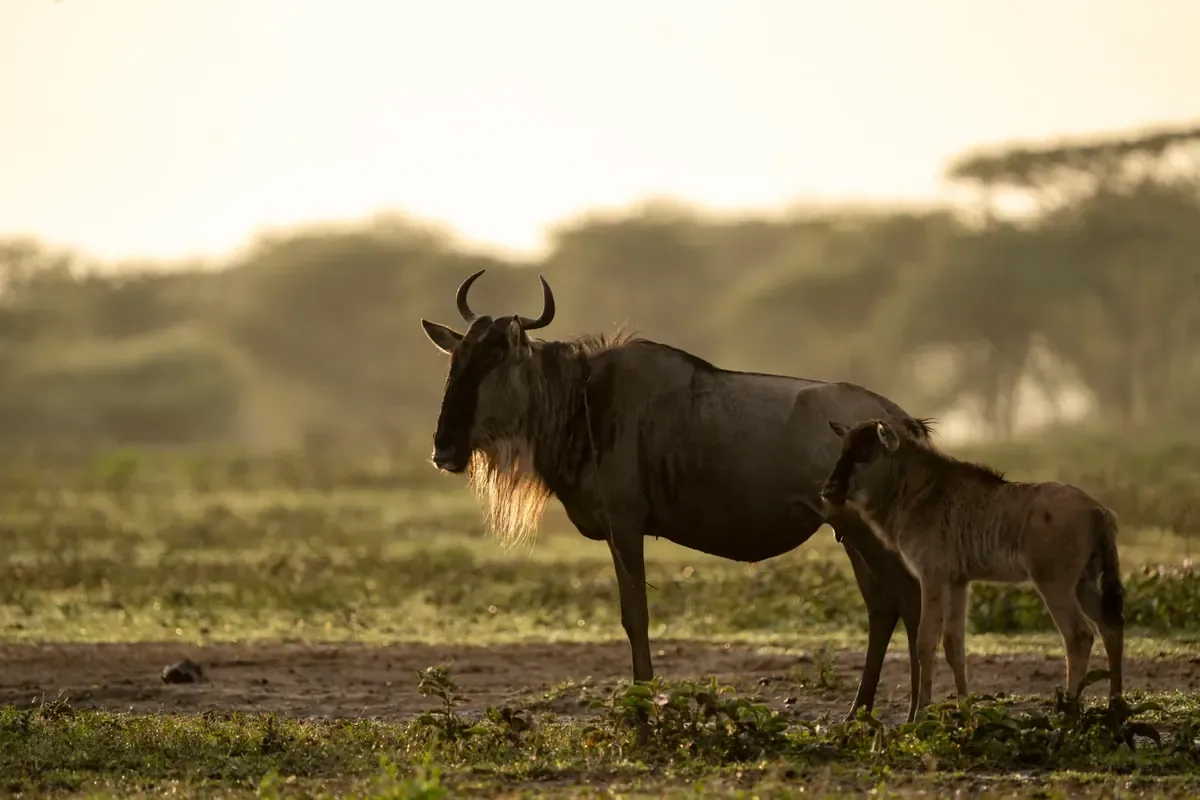
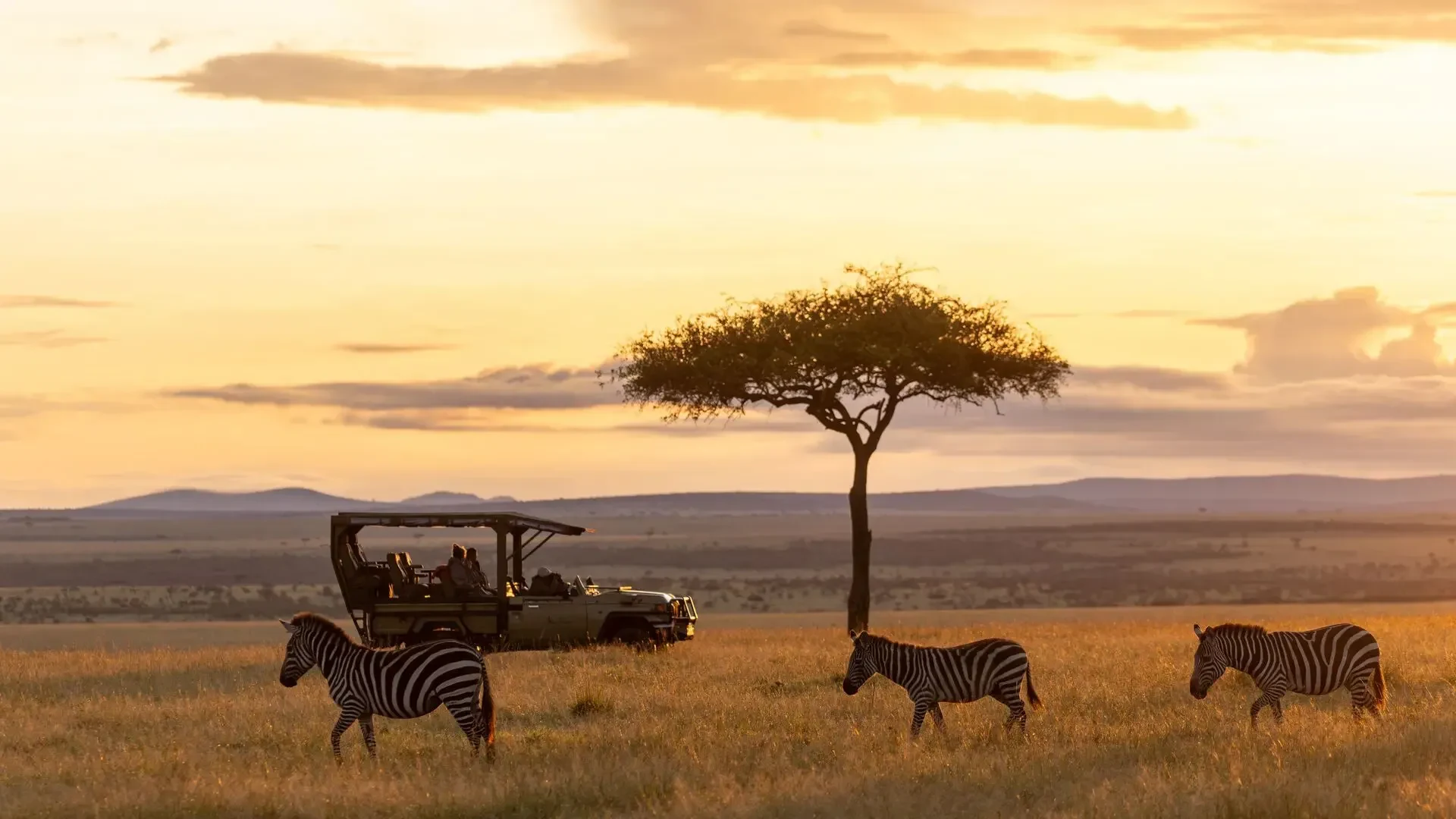
- The Mara River crossings are at their most frequent, with concentrated herds and exceptional predator action.
- The busiest month in the reserve — a conservancy camp gives you the Migration without the vehicle queues.
Dry and sunny
Weather
24 °C / 75 °F
Average temperature
Mara River crossings
Wildlife highlight
Peak season
Visitor numbers
The Migration trade-off: River crossings are unpredictable. Herds can mass on the bank for hours and not cross, and when they do, 30 or more vehicles may line up at a popular crossing point. If crossings are your priority, stay at least four nights in or near the reserve. If you dislike crowds, a conservancy camp gives you the Migration on the plains without the queues.
The main parks and what each does best
These are the headline safari areas. Most first trips combine two or three with an optional beach finish.
South-west Kenya
Maasai Mara & conservancies
Big cats, open plains and the Migration, with quiet conservancies nearby.
Explore
Southern Kenya
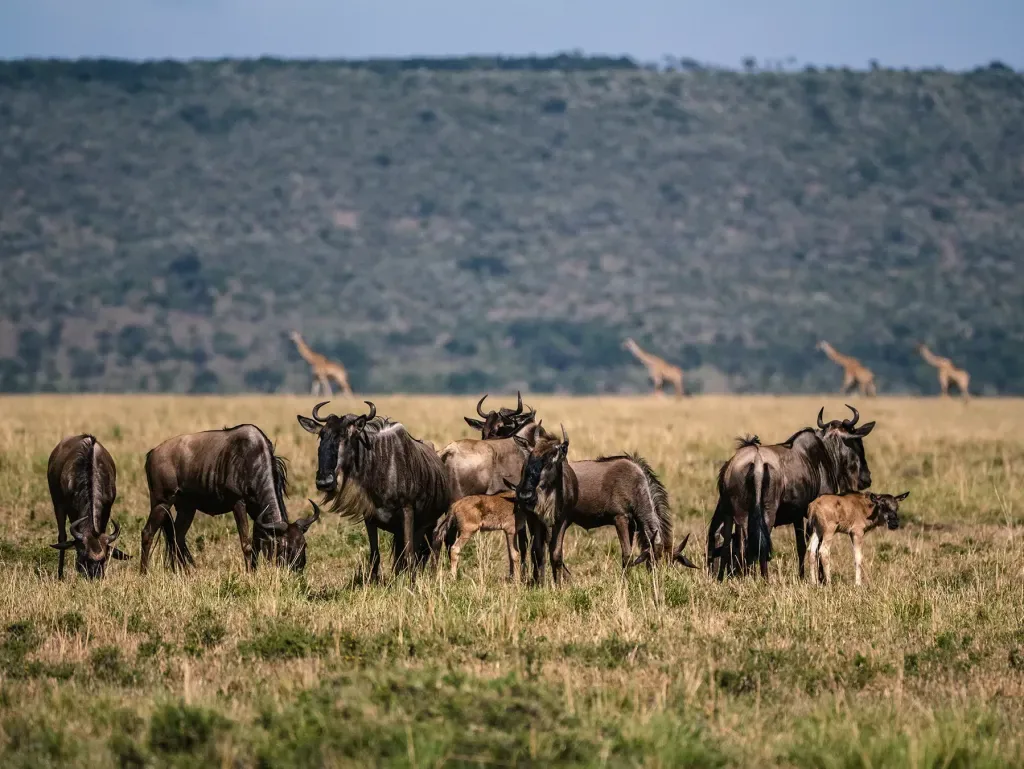
Amboseli
Large elephant herds with Kilimanjaro behind them.
Explore
Northern Kenya
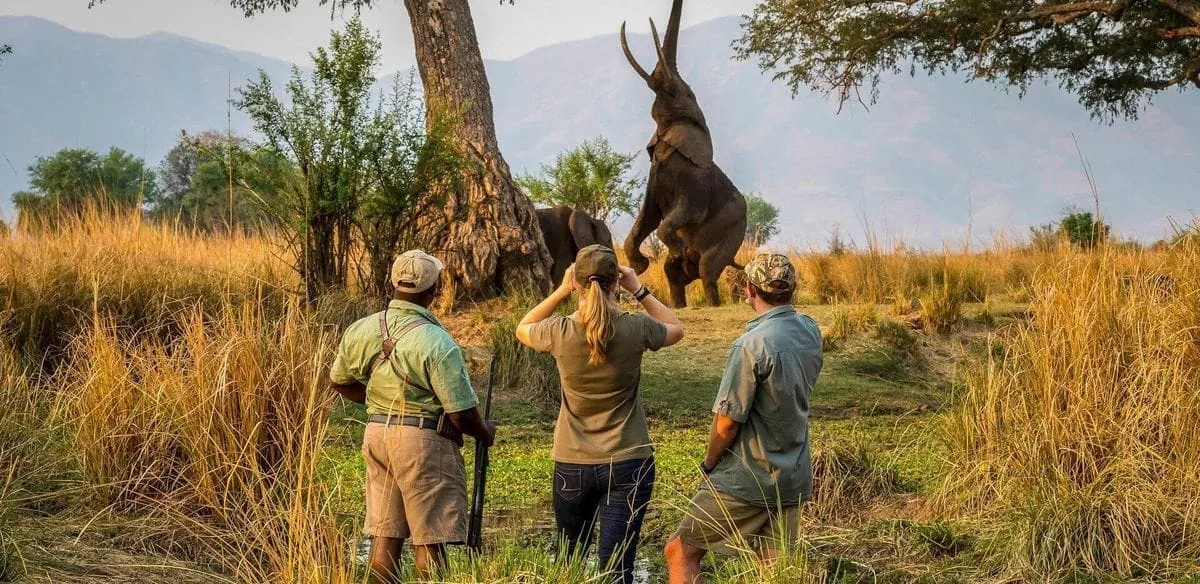
Samburu, Buffalo Springs & Shaba
River country home to the Samburu Special Five.
Explore
Central Kenya
Laikipia & Ol Pejeta
Private ranches under Mount Kenya, best for walking and rhino.
Explore
South-east Kenya
Tsavo East & West
Red-dusted elephants, lava flows and Mzima Springs.
Explore
Indian Ocean
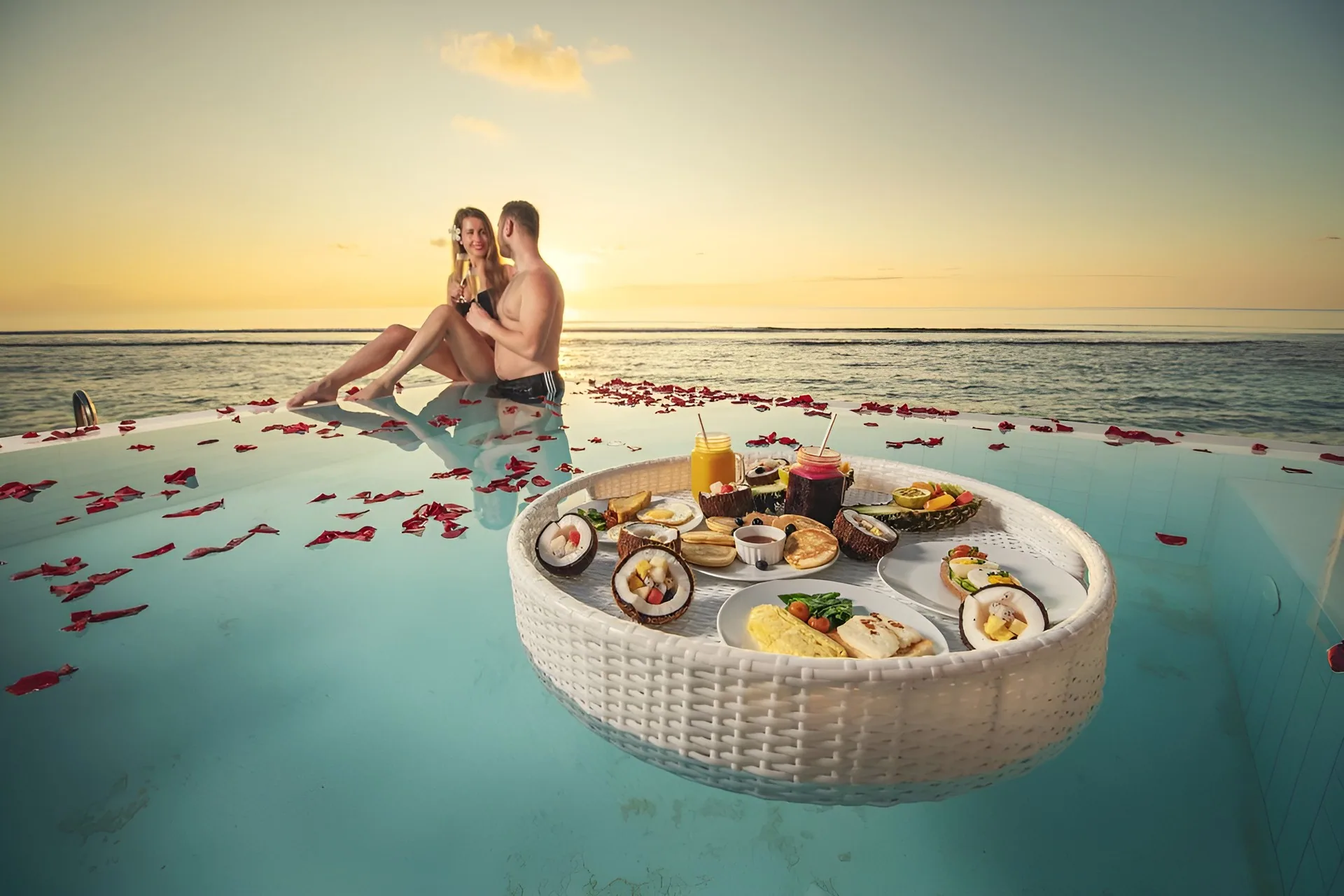
Beach: Diani, Watamu, Lamu
White sand, snorkelling and a car-free Swahili island town.
Explore
Travel times from Nairobi
| Destination | By road | By scheduled flight | Notes |
|---|---|---|---|
| Maasai Mara | 5–6 hours | About 45–60 min | Last stretch on rough road |
| Amboseli | 4–5 hours | About 45 min | Via Namanga or Emali |
| Lake Naivasha | 2–2.5 hours | — | Good stop on the way to the Mara |
| Lake Nakuru | 2.5–3 hours | — | Tarmac all the way |
| Ol Pejeta / Nanyuki | 3–4 hours | About 45–60 min | Gateway to Laikipia |
| Samburu | 5–6 hours | About 1 h 15 min | Hot; best combined with Laikipia |
| Tsavo West | 5–6 hours | — | Often combined with Amboseli |
| Diani / Mombasa | 8+ hours, or train | About 1–1.5 hours | Madaraka Express train to Mombasa |
| Watamu / Malindi | — | About 1–1.5 hours | Fly to Malindi |
| Lamu | — | About 1.5 hours | Fly to Manda Island, then boat |
| Arusha, Tanzania | 5–6 hours via Namanga | About 1 hour to Kilimanjaro | Includes border formalities |
Approximate times in dry conditions; roads and schedules change, so we confirm exact timings in your itinerary.
Choose your trip type
Private or shared
A shared safari puts you in a vehicle with up to six others on a fixed route and is the cheapest option. A private safari gives you your own vehicle and guide, so you decide when to leave, how long to stay at a sighting and when to head back. For families, photographers and honeymooners, private is worth it.
Road or fly-in
Road safaris cost less and show you rural Kenya, but Nairobi to the Mara is 5–6 hours, much of it rough. Fly-in safaris use small planes from Wilson Airport and turn a day of driving into a 45–90 minute flight. Many good trips drive the short legs and fly the long ones.
Lodge or tented camp
Lodges are solid buildings with more facilities. Tented camps range from simple to very luxurious, with en-suite bathrooms and proper beds under canvas, and put you closer to the sounds of the bush.
Sample Kenya itineraries
Every itinerary can be booked as shown or reshaped around your dates, budget and pace. Ask for any route by name and we'll send a costed version.
Budgeting: what drives the cost
Five factors set the price: season, accommodation tier, park and conservancy fees, internal flights, and vehicle (private 4×4 versus shared minivan). Park fees are fixed and cannot be negotiated. Indicative 2026 rates for non-resident adults:
| Park or area | Fee per adult | Managed by |
|---|---|---|
| Maasai Mara National Reserve | USD 100/day (Jan–Jun); USD 200/day (Jul–Dec) | Narok County |
| Mara private conservancies | Typically USD 100–130/night, usually in the camp rate | Each conservancy |
| Amboseli, Lake Nakuru | USD 90/day | KWS |
| Tsavo East & West, Nairobi NP | USD 80/day | KWS |
| Samburu National Reserve | About USD 70–85/day | Samburu County |
The Mara rate applies per 12-hour ticket, so a night inside the reserve can mean paying for the next day too. Fees change — ask us to show them as a separate, current line in your quote.
Realistic all-in ranges
Per person per day, sharing a room, including accommodation, meals, game drives, vehicle and park fees; excluding international flights and tips.
| Tier | Low / green season | Peak (Jul–Oct) | What you get |
|---|---|---|---|
| Mid-range | USD 400–600 | USD 550–850 | Private 4×4, good lodges or tented camps, mostly road |
| Luxury | USD 800–1,200 | USD 1,100–2,000+ | Conservancy camps, fly-in, top-qualified guides |
Add internal flights if you fly: scheduled Wilson–Mara tickets typically cost a few hundred US dollars each way per person. Solo travellers usually pay a single supplement of 20–50% in peak season.
Where to stay: mid-range, luxury and high-end
Your accommodation sets the tone of the whole safari: how close you are to the wildlife, how many vehicles you share sightings with, and how much time you spend driving.
Mid-range
Approx. USD 200–450 per person per night
Comfortable lodges and permanent tented camps with en-suite rooms, a pool at many, and good food. Often inside or close to the parks. The best value for first-time travellers and families.
- Ashnil Mara Camp — Maasai Mara
- Ol Tukai Lodge — Amboseli
- Sweetwaters Serena Camp — Ol Pejeta
Luxury
Approx. USD 500–1,000 per person per night
Small, owner-run camps in prime locations, often in private conservancies with limited vehicles, night drives and walking. Expert guides and a strong conservation story.
- Kicheche Bush Camp — Mara North
- Governors' Camp — Maasai Mara
- Tortilis Camp — Amboseli
- Saruni Samburu — Kalama Conservancy
High-end
Approx. USD 1,000+ per person per night
Signature properties with design-led suites, private vehicles and guides as standard, and exceptional food. Ideal for honeymoons, milestone celebrations and photographers.
- Angama Mara — Mara Triangle escarpment
- Mahali Mzuri — Olare Motorogi
- Sasaab — Samburu
Nightly rates are indicative per person sharing and vary widely by season and room type; your quote shows exact current rates. We often mix tiers to stretch a budget: a mid-range lodge for transit nights and a luxury conservancy camp where the wildlife is best.
Preparing to travel
Entry requirements: the Kenya eTA
Since January 2024, nearly all visitors need an Electronic Travel Authorisation (eTA) before they fly. You apply online with a passport scan, photo, flight booking and accommodation details, and pay by card. Processing usually takes about three working days. Apply only at the official etakenya.go.ke portal — third-party sites charge extra.
Health
See a travel clinic 6–8 weeks before departure. A yellow fever certificate is required when arriving from an endemic country, and malaria prophylaxis is advised in the Mara, Amboseli and coastal regions. Every camp we use carries a medical kit and a clear evacuation protocol.
Money
Kenya uses the Kenya shilling (KES). US dollars are widely accepted for extras and tips; bring notes printed in 2013 or later in good condition. Visa and Mastercard work at lodges and in Nairobi; ATMs are reliable in towns but absent in parks.
Plastic bag ban
Kenya banned plastic carrier bags in 2017, one of the strictest bans anywhere. Duty-free shopping bags can be confiscated on arrival, so unpack them before landing. Single-use plastics are banned in national parks and reserves.
Packing list
Neutral, breathable layers, a warm jacket for early Mara mornings (10–12 °C) and something considered for dinner beneath the stars. We send a tailored packing list with your final documents, right down to camera and binocular advice.
Leave at home: hard suitcases, camouflage clothing, drones (permits needed, banned in parks) and plastic carrier bags.
The essentials
- Khaki, olive, tan or grey clothing — skip bright white, dark blue and black (tsetse flies)
- Fleece or light down jacket and a windproof layer
- Soft duffel bag, no wheels — 15 kg limit on fly-in flights
- Binoculars (8×42 or 10×42), one per person
- Camera with 100–400 mm zoom; spare batteries and cards
- UK-style Type G plug adapter, headtorch, refillable bottle
- Medication in original packaging, plus prescriptions
On safari
A typical safari day
| 05:30–06:00 | Wake-up call with tea or coffee at your tent |
| 06:15 | Morning game drive: best light, most active predators |
| 09:00–10:00 | Bush breakfast in the field, or brunch back at camp |
| 11:00–15:30 | Lunch, siesta, pool, or a guided walk in conservancies |
| 16:00 | Afternoon tea, then the afternoon game drive |
| 18:30 | Sundowners with a view; reserve vehicles must be back by about 18:30 |
| 19:30 onwards | Fireside drinks, dinner, and night drives in conservancies |
Tipping guide (USD)
| Private safari guide | 15–25 per guest per day |
| Camp staff (shared tip box) | 10–20 per guest per day |
| Camp or conservancy guide (fly-in) | 10–20 per guest per day |
| Butler or tent attendant | 5–10 per guest per day |
| Transfer driver | 5–10 per transfer |
| Porters | 1–2 per bag |
Tip at the end of your stay, in an envelope, in US dollars or shillings.
Wildlife etiquette and safety
- Stay seated and keep arms inside the vehicle near animals. Speak quietly.
- Never ask your guide to drive off-road in the national reserve; it is illegal there.
- Never feed animals, including monkeys around camp.
- At a crowded sighting, ask your guide to give the animals space or move on.
- After dark, always walk with an escort and zip your tent fully.
Choosing a trustworthy operator
- Licence: A current Tourism Regulatory Authority (TRA) licence in Kenya. Ask for the number.
- Association membership: KATO (Kenya Association of Tour Operators) offers a complaints route. Confirm on KATO's own member list.
- Guides: Ask whether guides hold KPSGA bronze, silver or gold certification.
- Vehicles: 4×4 Land Cruisers with pop-up roofs, window seats for everyone, charging points and a cool box.
- Reviews: Read recent reviews on several platforms and see how the operator answers complaints.
- Red flags: Prices far below everyone else's, full payment to a personal account, no physical address, vague answers about camps, and pressure to book within 24 hours.
Put us to the test: Ask Williamson Adventures every question on this list. We're a licensed operator and member of the Tanzania Association of Tour Operators (TATO), with an office on Naurei Street, Simeon Road, Arusha. We name your guide, vehicle and every camp in advance, and put all terms in writing before you pay.
Extending your safari to Tanzania or Zanzibar
Kenya and northern Tanzania share one ecosystem, and Zanzibar is a short flight from both. Adding 4–7 days across the border gives you the Ngorongoro Crater, the wider Serengeti and a proper Indian Ocean beach in one trip.
Follow the Migration all year: herds calve in the southern Serengeti (Ndutu) from about December to March, then reach the Mara from about July.
Cross by land via the Namanga border (5–6 hours Nairobi to Arusha, including formalities) or fly direct from Nairobi to Kilimanjaro International in about an hour.
As an Arusha-based operator, Tanzania is our home ground — a combined Kenya–Tanzania safari is where we can offer you the most.
From our guests
Rated 5.0 by travelers worldwide
"William was incredibly responsive and quick to customize our trip — and our guide Tom tailored every day to our interests."
Recent guests
· Private safari
"Climbing Kilimanjaro via Marangu with this team was life-changing. Our guides were attentive, supportive and full of encouragement."
Summit climbers
· 6-day Marangu climb
"Our guide Ibra answered every question about wildlife. Fluent English, deep knowledge, excellent driving. We recommend this agency."
Family of five
· Family safari
Kenya safari FAQ
Seven days covers the Mara and one other park. Ten days lets you add Samburu or Laikipia without rushing. Fewer than three nights in the Mara is usually too short.
July to October is the classic window for the Maasai Mara river crossings, while January to March offers warm, dry weather and superb big-cat viewing with fewer visitors.
Yes. The parks and conservancies are well managed, and you travel with a licensed professional guide in a serviced vehicle. Standard precautions apply: stay in the vehicle unless your guide says otherwise, and follow camp rules after dark.
As a planning guide per person per day, sharing: mid-range trips run about USD 400–850 and luxury USD 800–2,000+, depending on season. Park fees, internal flights and accommodation tier drive the total — we show every fee as a separate line in your quote.
No one can promise it. Herds can mass on the bank for hours and not cross. Staying at least four nights in or near the reserve during July to October gives you the best odds, and a conservancy camp lets you follow the herds without the vehicle queues.
Yes. Lion, leopard, elephant and buffalo are widespread, and black and white rhino are reliably seen at Ol Pejeta and Lake Nakuru. The Mara, Amboseli and Laikipia together cover all five comfortably.
Since January 2024, nearly all visitors need an Electronic Travel Authorisation (eTA) instead of a visa. Apply online at the official etakenya.go.ke portal before you fly; processing usually takes about three working days.
Yes. Private conservancy camps offer flexible schedules, family tents and activities designed for younger travellers, and a private vehicle means the day moves at your family's pace.
Conservancies offer fewer vehicles, off-road access, walking and night drives; the reserve holds the famous crossing points. Many of our journeys combine both.
Kenya suits shorter trips, conservancy stays and beach combinations; Tanzania wins on scale, with the vast Serengeti and the Ngorongoro Crater. The two share one ecosystem, so many travellers combine them — we plan both.
Yes. We design private, tailor-made safaris in Kenya and Tanzania, working with trusted partner camps and guides across Kenya, and we manage the whole journey — including the cross-border logistics if you combine countries.
Most lodges and camps offer Wi-Fi, and mobile coverage reaches much of the Mara and Amboseli. Expect gaps in remote areas — we recommend treating those days as time offline.
Speak to an expert
Plan your Luxury Kenya safari
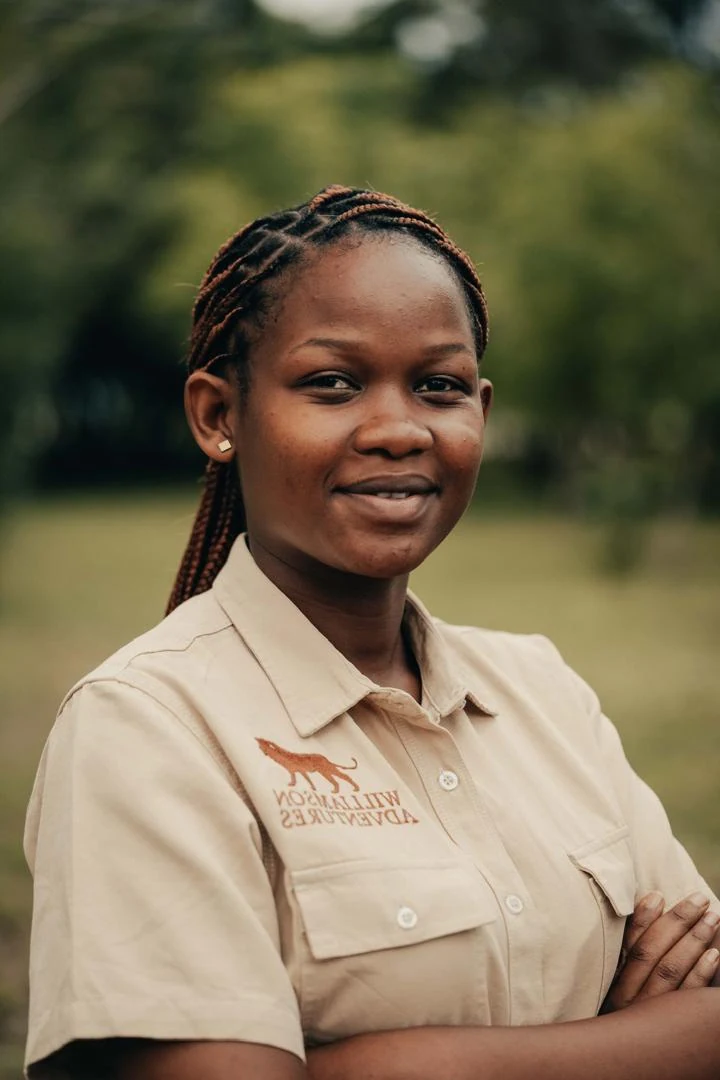
Call our Arusha-based team or send an enquiry for thoughtful, first-hand guidance.
Call us at +255 768 316 830
Or email info@williamsonadventures.com