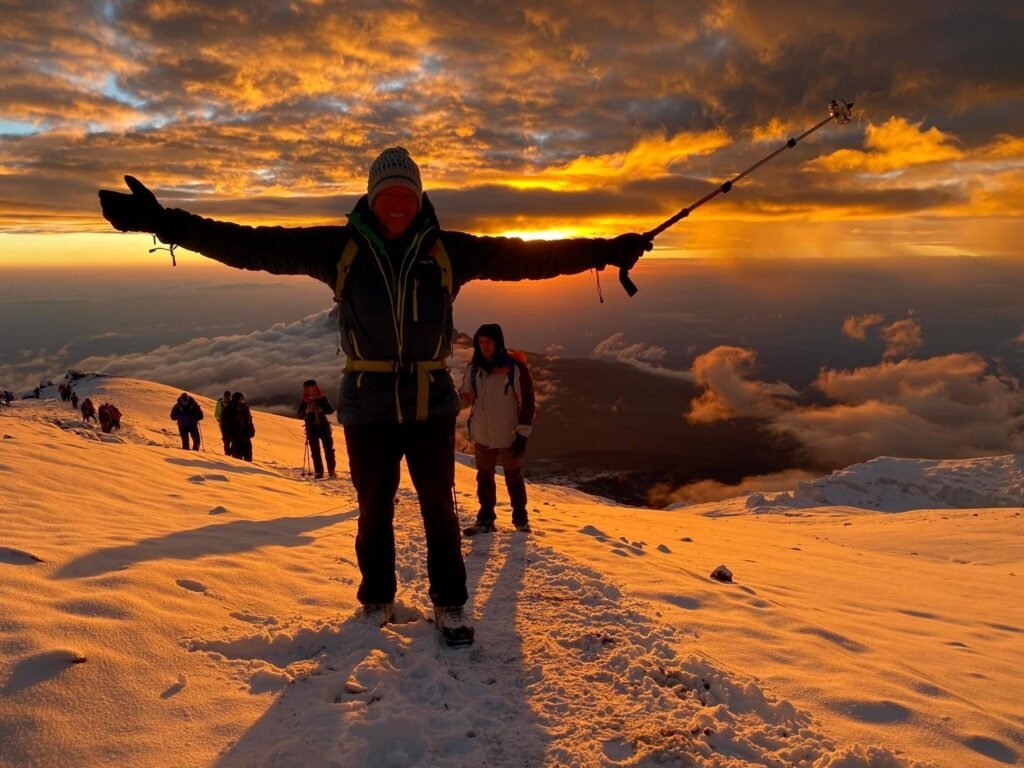
You’ve likely stared at photos of the Uhuru Peak sign, imagining the triumph of reaching the roof of Africa, but the practical side of planning requires a sharp reality check. Before booking your flight to Tanzania, note that the average cost to climb Kilimanjaro generally lands between $2,500 and $6,000 per person. While seeing such a wide gap in pricing might feel confusing, understanding where that money goes is the first step in ensuring you don’t just pay for a hike, but for a safe return.
Experienced travelers often describe the climb Mount Kilimanjaro price structure using an “iceberg model.” The advertised rate you see on a tour operator’s website is merely the visible tip above the water, usually covering government park fees and basic camping logistics. Beneath the surface lies the bulk of your actual expenses, including international airfare, specialized gear rentals, mandatory travel insurance, and the substantial “tipping kitty” expected by the crew. Without accounting for these submerged costs, your initial budget calculation could fall short by thousands of dollars.
Visualizing the sticker price requires grasping the sheer scale of human effort required to get a single person to 19,341 feet. For every one climber on the mountain, industry standards typically dictate a support team of three to four people, including a lead guide, assistant guide, cook, and multiple porters carrying tents and food. You aren’t simply hiring a chaperone for a walk; you are funding a mobile expedition that requires fair wages for a small village of support staff moving camp every single day.
This logistical complexity explains why budget operators cutting corners can offer dangerously low rates while reputable companies charge a premium for safety equipment like oxygen tanks and pulse oximeters. Determining exactly how much it costs to summit Kilimanjaro depends heavily on whether you view the trek as a budget backpacker trip or a high-altitude expedition requiring strict safety protocols. By breaking down these expenses line by line, you can easily spot the difference between a great deal and a risky gamble.
The Non-Negotiable $1,000: Breaking Down Kilimanjaro National Park Fees
Before looking at tent brands or flight prices, realize that approximately $800 to $1,000 of your tour cost vanishes instantly. This money goes directly to the Kilimanjaro National Park Authority (KINAPA) in the form of mandatory government taxes. These fees are non-negotiable and identical for every climber, regardless of whether you book with a budget outfit or a luxury brand. This creates a hard “price floor”—if an operator offers a 7-day climb for $1,400, they are losing money on paper, which suggests they are likely cutting corners on safety or staff wages to break even.
The daily receipt explains why the baseline cost is so high. For every 24 hours you spend on the mountain, the park charges a stack of individual fees that accumulate quickly:
- Conservation Fee: Approximately $70 per day just for the privilege of accessing the park.
- Camping or Hut Fee: About $50 to $60 per night to pitch a tent or sleep in a dormitory hut.
- Rescue Fee: A mandatory one-time charge of roughly $20 intended for emergency evacuation services.
- Crew Fees: A small daily fee (around $2) for each porter and guide supporting your climb.
While the “Rescue Fee” might sound like comprehensive insurance, it generally only covers basic evacuation via a specialized stretcher or a park vehicle to the gate. It does not cover high-altitude helicopter extraction, which is why purchasing your own travel insurance is still critical. Once these fixed government costs are paid, the remaining budget determines the actual quality of your food, gear, and guide expertise. This leads to the most significant variable in your planning: distinguishing between a bare-bones operator and a full-service expedition.
Budget vs. Luxury Operators: What an Extra $2,000 Actually Buys You
Once the government takes its non-negotiable cut, the remaining price difference generally falls into three distinct tiers: budget, mid-range, and luxury. This choice mirrors selecting an airline class; while every climber walks the same trail, the level of support varies drastically. A budget operator working with thin margins often relies on aging equipment and repetitive meals to keep costs down, while a mid-range or luxury provider invests that extra money directly into your daily comfort and energy maintenance.
Nutrition is often the first place climbers notice the tangible return on their investment. On a bargain trek, breakfast might consist of little more than instant coffee and plain porridge, which makes it difficult to maintain the high calorie intake required for seven days of strenuous hiking. Conversely, higher-tier operators employ trained mountain chefs who prepare fresh, multi-course meals including hot soups, proteins, and fruits, ensuring your body has the necessary fuel to battle fatigue and altitude sickness effectively.
Beyond the food, the quality of your shelter plays a massive role in how well you sleep at sub-zero temperatures. Budget companies frequently use standard retail tents that may leak or struggle in high winds, whereas premium outfitters use heavy-duty, four-season expedition tents designed to withstand harsh alpine storms. Perhaps the most appreciated upgrade in the mid-range and luxury tiers is the inclusion of a private toilet tent, which saves you from navigating frozen ground to reach the often unsanitary public long-drop facilities in the middle of the night.
These comforts serve a critical functional purpose by reducing stress and preserving your physical reserves. Every ounce of energy saved by sleeping warmly, eating well, and maintaining hygiene increases your probability of standing on the summit. However, cutting costs doesn’t just mean less comfort; it often leads to thinner safety margins when conditions turn dangerous.
The ‘Safety Tax’: Why Saving $500 Could Cost You the Summit
When things go wrong at 15,000 feet, your guide effectively becomes your doctor, making their level of training the most critical line item on your receipt. Budget operators often hire freelance staff with minimal first aid training to save on wages, whereas reputable companies mandate that head guides hold current Wilderness First Responder (WFR) certifications. This specific qualification ensures they can distinguish between a simple dehydration headache and the early stages of life-threatening conditions like HAPE (fluid in the lungs) or HACE (swelling of the brain), making the higher labor cost a direct investment in Kilimanjaro safety.
Equipment differences extend far beyond the thickness of your sleeping mat and into the realm of medical necessity. A responsible operator includes daily health checks using a pulse oximeter—a small device that clips onto your finger to measure oxygen saturation levels in your blood—to track how well you are acclimatizing. Furthermore, carrying heavy cylinders of emergency oxygen requires hiring extra porters, a logistical expense that bargain outfitters frequently skip to lower the sticker price. While you hopefully won’t need to use the oxygen, having it immediately available prevents a forced descent at the first sign of trouble, thereby significantly protecting your summit success rate.
Treating these safety protocols as optional add-ons is a financial gamble that rarely pays off. If a medical crisis escalates because it wasn’t caught early by a trained guide, the cost of emergency mountain rescue services—often requiring a helicopter evacuation that demands thousands of dollars upfront—dwarfs the few hundred dollars saved on the initial booking. Paying this “safety tax” essentially buys you an insurance policy against preventable failure. Once you have secured a safe team, the next biggest factor influencing your total price tag is simply how long you plan to stay on the mountain.
Why Route Choice Changes Your Receipt: Duration vs. Daily Cost
Calculators suggest that the shorter your climb, the lower your bill, but applying this logic to Kilimanjaro can be a costly mistake. Every additional 24 hours on the mountain incurs roughly $200–$300 in mandatory government conservation fees and staff wages. This creates a direct “acclimatization cost”: you are essentially paying a daily premium for your body to adjust to the altitude. While cutting days saves money upfront, it drastically reduces your summit chances, meaning you might pay thousands of dollars only to turn around at base camp.
Logistics also play a major role in determining the final Kilimanjaro hike price beyond just the duration. The Marangu route often appears as the budget option because it utilizes shared wooden huts, which eliminates the need for porters to carry heavy sleeping tents and camping equipment. Conversely, scenic routes like Lemosho begin at remote gates on the western side of the mountain, requiring expensive private vehicle transport to the trailhead that gets added to your package.
Determining which route is most cost-effective requires analyzing the “price per successful summit” rather than just the sticker price. A cheap itinerary with a high failure rate is a poor investment compared to a longer, more expensive route that gets you to the top.
- Marangu (5-6 Days): $1,800 – $2,300 (Lowest cost, but lower success rates due to rapid ascent).
- Machame (7 Days): $2,200 – $2,700 (The most popular balance of cost and acclimatization).
- Lemosho (8 Days): $2,600 – $3,200 (Higher cost due to transport and duration, but highest success rate).
While the number of days dictates the fees paid to the park, the size of your support team dictates the human cost of your climb.
The Ethical Price: Why Fair Porter Wages Shouldn’t Be Negotiable
If you spot a deal under $1,700, you haven’t found a loophole; you are likely looking at a budget balanced on the backs of the support crew. Since government park fees are non-negotiable, bargain operators often slash costs by underpaying the porters who carry your camp. This makes KPAP compliance a vital check for ethical travelers. The Kilimanjaro Porters Assistance Project certifies that operators pay fair wages and provide adequate warm clothing, ensuring the crew isn’t trekking in sneakers at 15,000 feet just to keep your invoice low.
Beyond wages, proper care involves strict logistical standards that directly impact the price you pay. A responsible operator ensures every staff member receives three adequate meals daily and enforces a hard 20kg weight limit for the loads they carry to prevent injury. Adhering to these rules requires hiring more porters to transport the same amount of gear, which naturally increases the total trip cost. Whether you are comparing local vs international agencies, the math of human rights remains constant: treating the crew with dignity costs money, and cutting those corners compromises the team essential to your safety.
Opting for the cheapest sticker price often shifts the financial burden onto the staff, forcing them to rely desperately on gratuities just to survive. A fair upfront fee ensures their base needs are met, preventing a scenario where your guides are exploited before the hike even begins. However, even with ethical operators, base wages are only half the equation. The culture of the mountain dictates that climbers also contribute directly to the crew’s income, making it essential to budget separately for the Kilimanjaro porter tipping guidelines.
Tipping the ‘Mountain Village’: Calculating Your Support Crew’s Bonus
While your operator fee secures your permit and food, gratuities serve as a direct financial acknowledgment of the specific team that hauls your life up the mountain. You aren’t just thanking a single guide; you are supporting a support staff of 10 to 15 people for a standard group climb. To manage this without carrying a pocketful of loose cash on the summit, most groups organize a “tipping kitty.” This is a pooled fund collected from all climbers at the hotel before departure, ensuring fair distribution and saving you from complex math at high altitude.
Calculating exactly how much to budget for summiting requires planning for roughly $250 to $450 per climber for the entire trek, depending on your group size and route duration. Using standard Kilimanjaro porter tipping guidelines, the group’s total daily contribution is generally split among the crew based on rank:
- Lead Guide: $20–$25 per day
- Assistant Guide: $15–$20 per day
- Cook: $15 per day
- Porter: $8–$10 per day
The actual handover happens during the “Tipping Ceremony” on the final morning, a celebratory event involving song, dance, and transparency to ensure every staff member receives their share. Be strictly careful with your currency; Tanzanian banks rarely accept US bills printed before 2006 or those with tears, so bring crisp, newer notes to avoid leaving your staff with money they cannot exchange. Once you have accounted for the crew’s gratuity, the next biggest variable in your financial plan is equipment, where you must decide between high-end purchases or local rentals.
Gear Rental vs. Buying: Saving $600 on Your Equipment List
Outfitters often recommend a comprehensive gear checklist that totals over $800 if purchased brand new, a sticker shock that catches many aspiring climbers off guard. To keep your budget manageable without freezing on the summit, apply a simple rule: buy the items that require a custom fit, and rent the heavy-duty thermal layers. The most critical “buy” on your list is your footwear. You should never rent hiking boots because breaking them in takes weeks, and a single blister from a borrowed pair can end your summit bid before you reach the halfway point.
For the specialized high-altitude equipment that you are unlikely to use again, rely on the robust rental market in Moshi and Arusha. Local gear shops and tour operators stock heavyweight items specifically rated for Kilimanjaro’s distinct climate zones, where temperatures drop well below freezing. Renting these big-ticket items not only saves you roughly $600 but also spares you from hauling bulky luggage across the globe. Standard rental prices for high-altitude gear are generally affordable for the duration of the trek:
- -20°F (-30°C) Sleeping Bag: $40 – $50
- Heavy Down Summit Jacket: $35 – $45
- Adjustable Trekking Poles: $15 – $20
- Gaiters (for mud/scree): $10 – $15
Choosing to rent converts a major capital expense into a minor line item, significantly lowering the total climbing Mount Kilimanjaro cost. Always inspect rental gear in town the day before your climb to ensure zippers work and insulation is not clumped. With your equipment sorted and your pack weight managed, your final financial hurdles are the logistical expenses required to get you to Tanzania in the first place.
Beyond the Mountain: Budgeting for Flights, Visas, and Vaccinations
Your trekking package covers the mountain, but getting your boots on Tanzanian soil requires its own budget strategy. Most climbers fly directly into Kilimanjaro International Airport (JRO), which is conveniently located halfway between the major support hubs of Moshi and Arusha. Depending on your departure point in the United States or Europe, flight costs to Kilimanjaro International Airport generally range from $800 to $1,500, with prices spiking significantly during the prime climbing seasons of July and December. Booking these tickets at least six months in advance is the most effective way to lock in the lower end of that spectrum and avoid paying premium rates for last-minute availability.
Once you land, the bureaucratic costs begin immediately at customs. Tanzania imposes specific entry fees based on nationality, costing American citizens $100 for a multi-entry tourist visa, while most other nationalities pay $50. While you can often obtain these permits upon arrival, processing the application online in advance saves valuable time after a long flight. This essential paperwork is rarely included in tour operator quotes, meaning you must have the specific cash amount or a credit card ready to clear immigration before you can collect your bags.
Medical preparation represents the final layer of the hidden expenses of trekking in Tanzania. You must carefully review vaccination and visa requirements, as many travelers are required to present a Yellow Fever Certificate to enter the country, particularly if they have transited through a risk zone like Kenya or Ethiopia. When you combine the cost of this vaccine with a necessary prescription for anti-malarial medication, you should budget an additional $100 to $200 for your pre-trip health needs. With these international logistics settled, the only remaining surcharge to consider depends on whether you plan to join a group or attempt the summit alone.
The Single Supplement and Solo Climbing: Managing the ‘Loner’s Fee’
Solo travelers joining a group often face a specific surcharge known as the single supplement. Since most tour operators calculate their base prices on double occupancy in hotel rooms and mountain tents, requesting your own sleeping quarters triggers single supplement fees for climbers that typically range from $200 to $500. This payment secures privacy for sleeping and changing gear, but it applies only to accommodation; you will still hike and dine with the rest of the team.
Opting for a completely private trek creates a much larger financial gap than simply paying for a private tent. When analyzing solo climb vs group tour rates, independent expeditions are significantly more expensive because the fixed costs of the expedition cannot be split. A support crew of twelve to fifteen staff members requires transport to the trailhead and food supplies, and in a private climb cost breakdown, a single hiker must absorb these logistical expenses entirely rather than sharing the burden with fellow trekkers.
The most budget-friendly compromise is booking a spot on a scheduled group climb. These pre-set departure dates allow individual travelers to join others, effectively crowd-sourcing the heavy transport and crew costs while maintaining a social atmosphere on the trail. With your climbing team selected and your final budget established, the last financial safeguard involves protecting that investment against medical emergencies and cancellations.
High-Altitude Insurance: Protecting Your $5,000 Investment
Your standard travel insurance policy likely becomes worthless the moment you step onto the mountain. Most general travel policies contain an “altitude exclusion clause,” which invalidates medical coverage if you hike above 3,000 meters (roughly 9,800 feet). Since Kilimanjaro’s summit sits at 5,895 meters, relying on a generic credit card policy leaves you completely exposed during the most dangerous days of your trek. You must verify that your specific plan explicitly covers “trekking” or “hiking” up to 6,000 meters to ensure you are protected all the way to Uhuru Peak.
Finding the right coverage requires looking beyond standard vacation packages. Specialized providers like World Nomads or Global Rescue offer plans designed specifically for these rigorous conditions, ensuring that high-altitude coverage is a contractual guarantee rather than a vague promise. While the average cost of trekking insurance ranges from $100 to $200 depending on your age and trip duration, this is a non-negotiable expense that most reputable tour operators will require you to prove before they allow you to sign the climbing waiver at the park gate.
The financial logic behind purchasing this protection is straightforward when weighed against the mountain rescue cost. If you suffer from severe altitude sickness or an injury near the summit, a private helicopter evacuation can cost between $5,000 and $10,000, often payable immediately before the pilot takes off. Paying a small premium now protects you from a massive financial shock later, ensuring your bank account survives the adventure even if your body struggles. With your safety net secured and all logistical costs accounted for, you can now examine the complete financial picture.
Your Final Kilimanjaro Budget Blueprint: Total Costs and Next Steps
Asking how much to climb Kilimanjaro initially reveals a simple figure, but the full answer involves more than just a trekking fee. Seeing the full financial picture protects you from dangerous budget operators and ensures your support team is paid fairly. Instead of fearing “hidden” costs, you can now approach the mountain with a realistic plan and the confidence that your investment covers your safety.
To finalize your saving goal, consider these “all-in” profiles which cover international flights, gear, tips, and the Kilimanjaro price for the trek:
- The Backpacker (~$3,500): Shorter route, rented gear, economy flights, and minimal off-mountain comfort.
- The Standard Adventurer (~$5,000): Better acclimatization (6-7 days), quality safety equipment, and ethical porter treatment. Usually the best value balance.
- The Luxury Explorer ($7,500+): Walk-in tents, portable toilets, hotel upgrades, and premium flight cabins.
With a target number in mind, budgeting for Kili becomes a series of manageable tasks. Start your journey with these four steps:
- Check your passport: It must be valid for 6 months past your travel date.
- Audit your gear: Identify what you own versus what you need to rent in Moshi.
- Open a dedicated fund: Set aside monthly savings based on your target profile.
- Book your dates: Aim for the dry seasons (Jan-March or June-Oct) to protect your investment.
Standing at Uhuru Peak requires a significant financial commitment, but the reward is a life-changing achievement. By prioritizing a reputable mid-range operator, you aren’t just buying a vacation; you are securing the infrastructure and expertise needed to get you to the top safely. Start planning today, because the view from 19,341 feet is worth every cent.