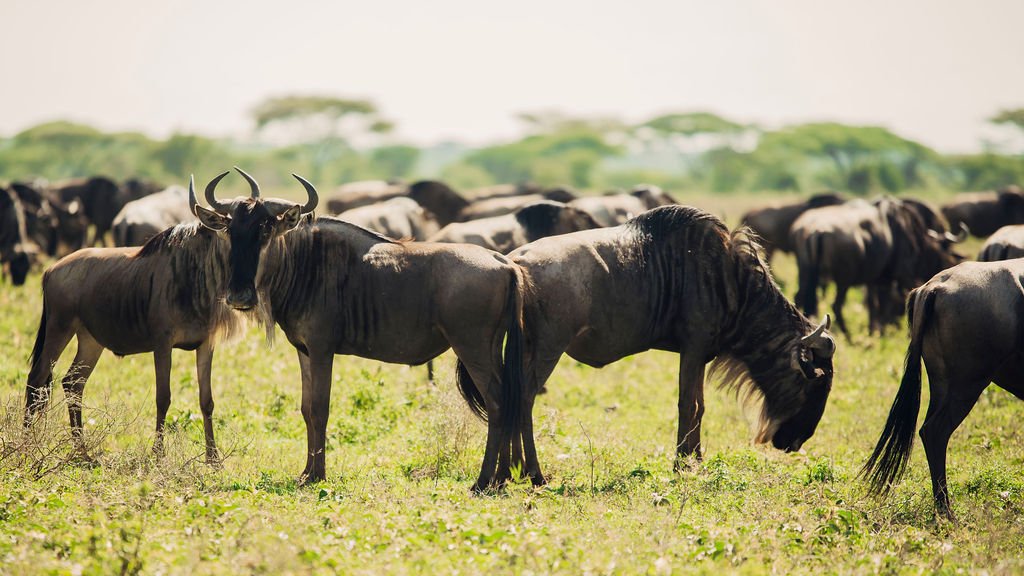
Many travelers make the mistake of treating the Great Migration like a scheduled parade that starts and stops on specific dates. In reality, it is a relentless, 365-day loop driven entirely by rainfall patterns across the massive Mara-Serengeti Ecosystem. Just as commuters chase a paycheck, these 1.5 million wildebeest follow storm clouds to find nutrient-rich grass, creating a constant, clockwise circle rather than a simple straight-line journey.
Picking the wrong destination guarantees standing in an empty field. Think of Tanzania’s Serengeti as the “main stage,” hosting the herds for roughly nine months, while Kenya’s Maasai Mara acts as their dramatic “summer home” during the dry season. Navigating the difference between Kenya and Tanzania migration seasons implies realizing that the animals ignore borders; they simply move where a Great Wildebeest Migration monthly map indicates the greenest pastures lie.
One Ecosystem, Two Borders: Mapping the Continuous Wildebeest Commute
While humans need passports to cross between Tanzania and Kenya, the massive herds see only a single, seamless landscape stretching toward the horizon. The ecosystem is actually one giant stage—the Serengeti in the south and the Maasai Mara in the north—connected by ancient grazing corridors. Millions of animals flow back and forth across this expanse, driven not by a calendar, but by the changing weather patterns that dictate their survival.
The secret to this endless movement lies beneath the hooves. The southern plains of the Serengeti are covered in soil composed of ancient volcanic ash, which produces short grasses incredibly rich in phosphorus. This mineral is the “superfood” essential for lactating mothers and growing strong bones in newborns. The herds instinctively know that this specific terrain offers the best possible start for the next generation during the calving season.
However, this nutrient-rich buffet relies entirely on the rains to unlock its potential. When the southern plains eventually dry out and the water sources dwindle, the animals are forced to abandon their nursery. They turn north, chasing the storm clouds toward the fresher pastures waiting across the border, setting the stage for the long trek through Tanzania’s vast interior.
Tanzania’s 9-Month Monopoly: Why the Serengeti Is the Heart of the Journey
Because the migration is a circle rather than a straight line, the herds actually spend the vast majority of their year—roughly nine months—within Tanzania’s borders. Once the calves gain strength on the southern short-grass plains, the drying earth forces the animals into a massive column moving northwest. This marks the transition from the open “nursery” into the long-grass plains and woodlands of the central Serengeti, a rugged trek where the scenery shifts from flat horizons to rocky outcrops known as kopjes.
By late May, the convoy funnels into the Western Corridor, a narrow stretch of land that serves as a dramatic bottleneck. Here, travelers often find a more exclusive experience compared to the crowded northern river banks later in the year. The herds must cross the Grumeti River—a smaller but crocodile-infested obstacle that acts as a deadly “practice run” before the main event at the Kenyan border.
Map your Tanzania wildlife migration itinerary to the herds’ specific location:
- January – March (Southern Serengeti): The prime window for where to see wildebeest calving season, featuring open views of newborns and active predators.
- April – May (Central Serengeti): The herds trek through the heart of the park, coinciding with the “long rains” which bring lush scenery but muddy roads.
- June (Western Corridor): The columns bunch up in the west to face the Grumeti River crossings.
Survival here means pushing further north, leading the survivors directly toward the world’s most famous wildlife stage in Kenya.
Kenya’s 3-Month Spotlight: Catching the High-Stakes Mara River Crossings
If the Serengeti represents the marathon of the journey, Kenya’s Maasai Mara delivers the high-intensity sprint. From July through October, the Masai Mara peak migration months offer a density of wildlife that is hard to match anywhere else in Africa. Because the Mara is significantly smaller than the Serengeti, roughly 1.5 million wildebeest flood into a confined space, creating a “summer home” effect where the grassy plains turn black with moving bodies. This concentration draws an incredibly high density of lions and cheetahs, who wait all year for this massive delivery of food to arrive on their doorstep.
The defining moment of this season is the interaction with the water. Unlike the earlier, smaller obstacles in the south, the Mara River crossing vs Grumeti River comparison is night and day. The Mara River is deeper, wider, and flanked by steeper cliffs, creating a lethal funnel where panic and exhaustion claim as many lives as the waiting Nile crocodiles. These crossings are not scheduled events; the herds may gather nervously on the banks for days before a single brave animal takes the plunge, triggering a chaotic, adrenaline-fueled stampede.
August and September generally serve as the best month for wildebeest river crossings, but success requires strategy rather than just luck. Keep these essentials in mind:
- Patience is Currency: Crossings are unpredictable; be prepared to wait by the riverbank for hours in the heat.
- Trust Your Guide: Experienced drivers can read herd body language to predict where and when a crossing might trigger.
- Positioning: You need a spot that offers a clear view of the potential exit points, not just the entry.
- Full-Day Outings: Pack a lunch box, as the action often happens midday when the herds get thirsty.
Once the short rains return in late October, the exhausted survivors turn south again, racing back to the Serengeti to complete the circle in time for the miracle of birth.
The Calving Season Secret: Seeing 8,000 New Lives Daily in the Southern Serengeti
While the northern leg of the journey is defined by high-stakes river crossings, the southern loop focuses on the sudden explosion of new life. From January to February, the herds congregate on the Ndutu region plains to give birth. This event is not a slow trickle but a synchronized phenomenon where nearly 8,000 calves are born every single day over a three-week window. By dropping their young simultaneously, the wildebeest overwhelm local predators with sheer numbers, ensuring that a higher percentage of offspring survive those critical first days. For travelers, this period offers a completely different energy than the chaotic river scenes; it is a time of renewal, playful interaction, and vast, green landscapes teeming with young animals.
Naturally, this concentration of vulnerable calves transforms the region into a hunting ground for Africa’s big cats. As the herds follow the migration route through Ngorongoro Conservation Area, cheetahs and lions take advantage of the open terrain to teach their own cubs how to hunt. When weighing the Southern Serengeti calving vs Mara predator action, the southern experience often provides superior visibility for photographers, as the short grass leaves predators with nowhere to hide. Once the calves gain enough strength to keep pace with the adults and the long rains begin in April, the mega-herd pushes westward, leaving the nursery behind to face their first major aquatic obstacles in the Grumeti region.
Grumeti vs. Mara: Choosing the Right River for Predator Action
Most documentaries focus exclusively on the dramatic northern border, but the migration’s first major aquatic challenge actually happens purely within Tanzania. Around May and June, the herds funnel into the Western Corridor and confront the Grumeti River. Unlike the steep, wide banks of the northern river, the Grumeti is shallower and surrounded by dense brush, creating a different kind of tension. Here, the danger isn’t just the water; it is the massive Nile crocodiles that use the thick vegetation to ambush thirsty animals before they even enter the stream.
The choice often comes down to a preference for exclusivity versus scale when planning a Mara River crossing vs Grumeti River experience:
- Grumeti River (June): Offers fewer tourists and a remote wilderness feel, but the river is a series of pools rather than a flowing torrent, making crossings harder to predict.
- Mara River (July–October): Delivers the classic “leap of faith” images with steep cliffs and rushing water, but requires sharing the view with dozens of other safari vehicles.
Regardless of which river you target, patience is the single most important tool in your kit. Wildebeest are notoriously indecisive; a herd might gather at the water’s edge for hours—or even days—before a single brave animal takes the plunge to trigger the stampede. Planning a Serengeti migration July to October itinerary requires allocating full days to waiting by the riverbanks, knowing that nature operates on its own schedule. Once you have decided on the timing and location, the next major factor in your planning will likely be the budget differences between the two countries.
Park Fees and Logistics: How Kenya and Tanzania Compare for Your Wallet
While the wildlife experience is comparable, the financial realities differ significantly between the two nations. Tanzania generally pursues a higher-cost model to limit crowds, often requiring internal flights to cover the vast distances of the Serengeti. In contrast, Kenya’s Maasai Mara is smaller and easier to access by road from Nairobi, making it slightly more forgiving for travelers watching their bottom line.
Consider these logistical differences when planning:
- Kenya: Often supports affordable drive-in circuits; daily conservation fees generally range from $100–$200 depending on the season.
- Tanzania: A park fees comparison Serengeti vs Masai Mara reveals a more complex structure (entry + concession fees + VAT); the massive geography usually necessitates “fly-in” safaris to maximize viewing time.
Beyond the entry tickets, your transport method dictates the final price tag. Budgeting for Tanzania vs Kenya safari itineraries essentially means deciding if you prefer the speed of light aircraft or the economy of overland travel. With the logistics and costs clearer, the only variable left is timing.
Your ‘Month-by-Month’ Cheat Sheet for Booking a Guaranteed Migration View
You no longer need to guess where the herds are hiding; you can now intercept them strategically. Success isn’t about luck, but matching your bucket-list goals to the ecosystem’s clock. Use this decision matrix to lock in your plans:
- For Baby Animals: Southern Serengeti (Tanzania) in Jan–March.
- For River Crossings: Maasai Mara (Kenya) in July–October.
- For The Trek: Western Corridor (Tanzania) in May–June.
Even with perfect timing, remember the “Rain Rule”: wet weather drives movement, so nature can shift the schedule by weeks. To stay flexible, learn how to track the Great Migration live using herd-tracking apps before you depart. Start by defining your priority experience, then consult a specialist for planning a multi-country migration safari if you want to see the full cycle. Book at least a year in advance—the best seats for this show fill up fast.