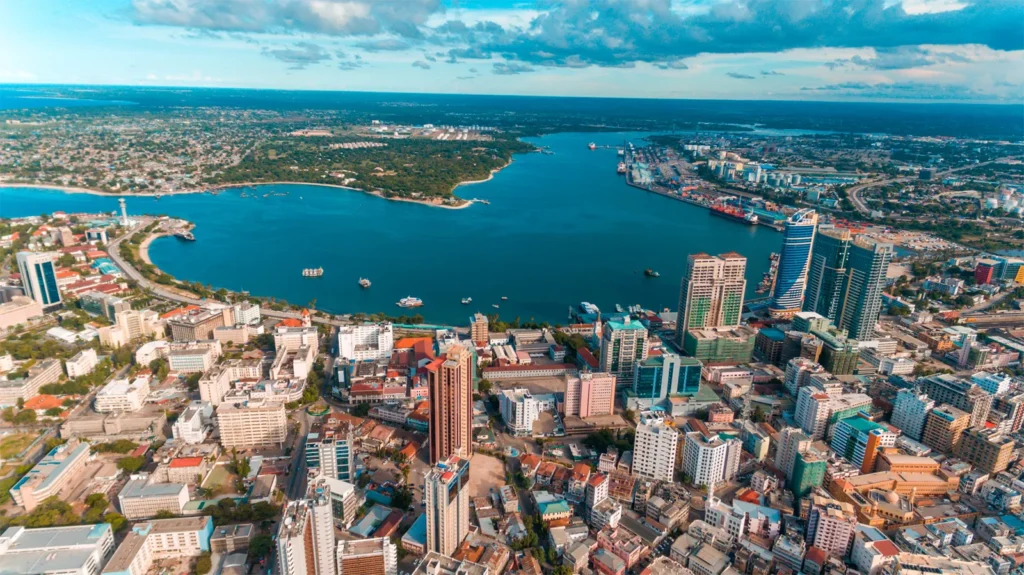
The scent of Dar es Salaam hits you before the equatorial heat, a thick, salty mix of Indian Ocean breeze and the charcoal smoke of street-side grills. This sensory collision captures the essence of Tanzania’s largest city, a sprawling metropolis acting as the commercial “front door” to East Africa. While many travelers simply pass through on their way to a safari or a relaxing Dar es Salaam vs Zanzibar vacation, those who linger discover a city humming with an electric energy entirely its own.
Though Dodoma holds the title of Tanzania’s capital on paper, the heartbeat of the nation, its money, its music, and its soul, resides here on the coast. Historically named Bandari ya Salama, or the “Haven of Peace,” by Sultan Majid of Zanzibar in the 1860s, the city began as a quiet fishing village. Today, that name feels ironic given the frenetic pace of daily life. The city serves as the economic engine of the country, overshadowing the political center in everything from international trade to pop culture.
Locals often refer to their home by a different, affectionate nickname: Bongo. Derived from the Swahili word for “brain,” this term implies that you need sharp wits to survive and thrive here. Understanding Bongo reveals the modern Tanzanian spirit—a relentless drive and creativity found in the machingas (street vendors) weaving through traffic and the entrepreneurs building glass skyscrapers next to colonial relics. It represents the “hustle” required to navigate a city rapidly transforming into a global megacity.
Dar es Salaam travel demands embracing this dynamic complexity. Learning about the city means peeling back layers of Arab, Indian, and German influence that have seasoned the local culture like spices in a pot of Pilau rice. Whether navigating the chaotic markets or watching the sunset at Coco Beach, the city demands attention, offering a vibrant urban experience that complements the region’s natural wonders.
Decoding the Swahili Soul through Coastal Traditions
While massive cargo ships in the harbor define the modern economy, the seasonal monsoon winds define the city’s soul. For centuries, these trade winds carried wooden dhows from the Arabian Peninsula and the Indian subcontinent to the East African coast, creating a distinct Swahili identity that is far more than just a language. It is a cosmopolitan blend where African roots mix with Omani architecture and Gujarati spices. Walking through the city center, you are just as likely to smell cardamom in a cup of spiced coffee as you are to hear the call to prayer mingling with the beat of Bongo Flava music. This isn’t just an African city; it is an Indian Ocean gateway.
This cultural fusion is most distinct in a plate of Pilau. Much like New Orleans gumbo tells the story of its settlers, Swahili cuisine reveals the history of the coast. The rice is grown locally in Tanzania, but the cloves, cinnamon, and cumin that season it were originally imported by traders. Food here acts as the common language bridging the gap between indigenous coastal tribes and the descendants of Asian merchants. Whether dining in a high-end restaurant or grabbing a quick bite from a street vendor, the flavor profile testifies to centuries of cross-continental exchange involving Swahili culture and coastal traditions.
Beyond the ancient history of trade, the modern mindset is deeply influenced by Ujamaa. Introduced by Tanzania’s first president, Julius Nyerere, this political philosophy translates roughly to “familyhood” or “socialism.” In daily life in Dar es Salaam, it manifests as a profound sense of community responsibility. While the strict economic policies of the 1960s and 70s have faded, the spirit of Ujamaa remains in how neighbors look out for one another. It explains why the city feels surprisingly safe and welcoming despite its massive size; the culture prioritizes collective well-being over rugged individualism.
Navigating this social landscape requires a basic grasp of etiquette, as greetings in Tanzania are lengthy, essential rituals rather than quick formalities. Skipping a greeting is often considered rude. These four essential phrases will help you connect with locals:
- Shikamoo (She-ka-mo): A respectful greeting used strictly for elders. The correct response is Marahaba.
- Mambo (Mam-bo): A casual “What’s up?” used among peers. Reply with Poa (Cool).
- Karibu (Ka-ree-boo): Meaning “Welcome.” You will hear this constantly, from shopkeepers to taxi drivers.
- Asante Sana (Ah-san-te Sa-na): “Thank you very much.” Politeness is highly valued here.
Armed with history and polite phrases, you are ready to dive into the city’s most intense sensory experience. The polite hum of conversation gives way to shouting auctions and crashing waves just a few blocks away. To truly understand the source of the coast’s bounty, leave the quiet cafes behind and navigate the slippery, chaotic, and vibrant floor of the Kivukoni Fish Market.
How to Experience the Chaos of Kivukoni Fish Market
Standing right at the harbor’s edge, the sensory experience of Kivukoni is immediate. Unlike the air-conditioned suburbs, this market operates on open-air intensity, where the smell of brine and the sound of wooden keels hitting the dock have remained unchanged for decades. It sits directly next to the ferry terminal connecting the commercial business district to the residential Kigamboni peninsula, making it a chaotic intersection of commuters, tourists, and traders. Here, the ocean isn’t just a view; it is a factory floor where tons of marine life are hauled onto wet concrete every morning to feed a metropolis of over five million people.
Timing is critical to seeing this spectacle at its peak. Kivukoni fish market visiting hours are strictly between 6:00 AM and 8:00 AM. Arriving during this window allows you to witness the live auctions, a theatrical display of rapid-fire Swahili bidding that determines the day’s prices for restaurants and hotels across the region. You will see massive buckets filled with Changu (Red Snapper), a local favorite for grilling, and the prized Nguru (Kingfish), essentially the steak of the Swahili coast. By 9:00 AM, the boats are mostly empty, the auctions finish, and the market settles into a slower retail pace lacking the frantic energy of the dawn rush.
Surrounding the damp auction tables is an army of micro-entrepreneurs known locally as Machinga. These are the backbone of the informal economy in Dar es Salaam, selling everything from plastic bags and sharp knives to second-hand clothes and mobile phone credit. The term comes from a southern Tanzanian tribe known for trading prowess, but today refers to any street vendor hustling to make a living. Watching them navigate slippery floors with merchandise balanced on their heads offers a masterclass in African urban resilience. They operate with thin margins and high volume, ensuring fish buyers have every accessory they need immediately.
While the fish market provides raw ingredients, the culinary and commercial epicenter lies a few kilometers inland. Kivukoni acts as the gateway, but the natural next step is to follow the flow of goods into the city’s interior. The fish auctioned at dawn will likely end up on a grill by lunchtime, perhaps at one of the top-rated street food spots in Kariakoo, where the chaos of the coast is magnified into the largest open-air market in East Africa.
Surviving and Thriving in Kariakoo Market
If Kivukoni is the city’s kitchen, Kariakoo is its engine room. Moving inland from the ferry terminal, you enter a district that defies the traditional definition of a shopping center. Instead of a single building, imagine a grid of city blocks where every square inch of sidewalk serves as a storefront and streets are packed with a density rivalling Tokyo or Mumbai. This is the definitive experience of the city; a place where commerce moves at a dizzying speed and silence is non-existent. The energy is electric, fueled by thousands of shoppers haggling over everything from imported electronics to mounds of Tanzanian spices.
Navigating this sprawl requires understanding its hidden logic. The central concrete market building a massive brutalist structure resembling an inverted pyramid—serves as the anchor, primarily housing agricultural produce fresh from the interior. The surrounding streets specialize in specific trade sectors: Msimbazi Street is the vibrant hub for textiles, draped in colorful Kitenge and Kanga cloth, while Uhuru Street is the go-to corridor for hardware and household goods. The Machinga fill the gaps between formal shops with mobile displays of belts, watches, and shoes, creating a multi-layered economy where formalized storefronts and informal street traders coexist symbiotically.
With such high density, a common concern arises: is Dar es Salaam safe for solo travelers in these chaotic zones? The risk here is primarily petty theft, not violent crime. You do not need a bodyguard, but you do need “street smarts” and high situational awareness. Adopt these protocols to navigate Kariakoo effectively:
- The “Kariakoo Hug”: Wear your backpack on your front rather than your back to prevent zippers from being quietly opened in the crowd.
- Keep Moving: Do not stop in the middle of a walkway to check your phone; step into a shop doorway or against a wall to orient yourself.
- Dress Down: Leave flashy jewelry and expensive watches at the hotel to blend in with working-class shoppers.
- The Firm “No”: If a vendor persists, a polite but firm “Hapana, asante” (No, thank you) is respected more than ignoring them.
- Negotiation Rule: Assume the first price quoted is at least 30% higher than the real price; bargaining is expected and is considered a social conversation, not an argument.
Once you have navigated the labyrinth of fabric and electronics, follow the scent of charcoal to the street corners. While guidebooks point to sit-down restaurants, the top-rated street food spots in Kariakoo are often unnamed grills set up on the sidewalks of Swahili Street. Hygiene is best judged by heat: stick to food cooked fresh in front of you. Look for Mishkaki (marinated beef skewers) grilling over open coals or Chipsi Mayai (a french fry omelet), which are safe, hot, and incredibly flavorful. As the frantic energy of the market fades with the setting sun, seek a quieter atmosphere in the crumbling stone facades of the city’s German Colonial Landmarks.
Discovering History in German Colonial Landmarks
Leaving the frenzy of Kariakoo, the city’s rhythm slows perceptibly as you approach the waterfront, where history is etched directly into the skyline. The Azania Front Lutheran Church stands as a visual anchor, a structure that seems transplanted directly from 19th-century Bavaria to the tropical coast. With its whitewashed walls and distinct red-tiled roof, the church overlooks the harbor entrance, serving as a reminder of the late 1800s when the city was the administrative capital of German East Africa. Walking these streets offers a contemplative experience, tracing the city’s evolution from a minor fishing village to a colonial stronghold.
German colonial era landmarks were built not just for administration, but for psychological impact. You can spot these buildings by their imposing, blocky architecture and deep verandas designed to catch the ocean breeze while signaling imperial permanence. The Old Boma on Sokoine Drive, one of the oldest buildings in the city, features thick coral-stone walls capable of withstanding both the humidity and the political turbulence of the last century. These structures now sit in the shadow of modern glass skyscrapers, creating a visual timeline where the colonial past and the commercial future stand side-by-side.
A deeper understanding of the region awaits within the National Museum and House of Culture exhibits. This is not merely a collection of dusty artifacts; it is the story of humanity’s origins. The museum houses critical fossil discoveries from Olduvai Gorge, including the famous “Nutcracker Man” skull, connecting the modern city to the dawn of human existence. Other galleries guide you through the tragic history of the slave trade and the intricate heritage of the coastal Swahili civilization, explaining how trade winds and tribulations blended African, Arab, and European lives into a single culture.
While the city center offers intellectual nourishment, understanding the city also requires managing the physical reality of the coastal climate. The humidity among these stone monuments can become oppressive by midday, making the shimmering turquoise water on the horizon look increasingly inviting. Once you have absorbed the weight of history and the heat of the urban core, look outward toward the marine reserves that offer the city’s best escape: Bongoyo and Mbudya Islands.
Escaping the Heat on Bongoyo and Mbudya Islands
Just a few miles off the coast, the urban clamor dissolves into the rhythmic lapping of the Indian Ocean. While the city center pulses with commerce, the Dar es Salaam Marine Reserve offers a sanctuary where the only traffic consists of colorful fish darting through coral reefs. These protected zones, specifically Bongoyo and Mbudya Islands, are accessible escapes visible from the mainland. They serve as the city’s natural air conditioning, providing a critical respite when the tropical humidity feels like a heavy blanket draped over the metropolis.
Reaching these sandbanks requires navigating to the Msasani Peninsula, an upscale neighborhood known for diplomatic residences and seaside dining. The primary gateway is “The Slipway,” a shopping and leisure complex where local boatmen and official ferry services dock. Advanced bookings are generally unnecessary; showing up in the morning with cash for the marine park fee and the boat fare is standard procedure. The journey is part of the decompression process, a short twenty-to-thirty-minute ride in a motorized dhow—a traditional wooden vessel—offering a panoramic view of the skyline shrinking behind you.
The choice between the two major islands depends on your preferences:
- Bongoyo Island: Located closer to the Msasani Peninsula, making it the most convenient option for a quick half-day trip. It features a dense coastal forest for short hikes, though the swimming area can be rocky during low tide.
- Mbudya Island: Situated slightly further north, this island is favored for its pristine, soft white sands and turquoise waters. It feels more like a “deserted island” getaway and is famous for local vendors serving fresh lobster and fish grilled right on the beach.
Even with the cooling ocean breeze, managing the coastal climate remains a priority. The equatorial sun is deceptive and can burn skin quickly even through cloud cover; high-SPF sunscreen and hydration are non-negotiable. Locals recommend visiting early in the morning to beat the midday scorch, as island amenities are rustic and shade is limited to thatched bandas (huts) which can fill up fast. Once you return to the mainland, sun-tired and covered in salt, the reality of the city’s bustling infrastructure returns. Navigating back to your hotel will likely involve trading the open water for the city’s complex road network, utilizing either the modern rapid transit system or the famous local minibuses.
Getting Around Dar es Salaam Using DART and Dala-Dalas
This sprawling metropolis moves to two distinct rhythms: the swift precision of modern infrastructure and the organic flow of traditional transit. Traffic congestion is a defining feature of the city, but the Dar Rapid Transit (DART) system acts as a dedicated artery cutting through the gridlock. Think of these blue and blue-and-orange buses as a surface-level subway; they utilize exclusive lanes physically separated from general traffic, allowing them to bypass the notorious rush-hour jams. For a visitor, the DART offers a safe, air-conditioned, and remarkably efficient way to travel between key hubs like the ferry terminal and the suburban districts for a fraction of a dollar.
While the rapid buses cover the main arteries, the colorful minibuses known as Dala-dalas serve as the city’s capillaries, reaching every corner the main lines miss. Riding one offers an unfiltered immersion into local life, where personal space is traded for unbeatable convenience and a vibrant soundtrack of Bongo Flava music. Unlike the prepaid card system used for the rapid buses, this is a cash economy where coins are passed hand-to-hand to the conductor, known as the mpigadebe, who often hangs out the door calling destinations. Using DART is about speed, but using a Dala-dala is about cultural connection; remember that stops are often requested by tapping on the metal roof frame or signaling the conductor, as formal bus stops can be mere suggestions in residential neighborhoods.
Most travelers will need to apply this transportation logic immediately upon landing, with a slight adjustment for comfort. A practical Julius Nyerere International Airport arrival guide suggests avoiding public transit with heavy luggage in favor of official taxis or ride-hailing apps like Uber or Bolt, which are plentiful and safe. The drive from the airport into the city center can take anywhere from thirty minutes to two hours depending on the time of day, offering your first real glimpse of the urban sprawl. Once you have dropped your bags at your hotel, switch to public networks for exploration without the burden of suitcases.
Successful navigation relies on a hybrid approach matching the scale of your journey. Use the DART to cover long distances quickly, switch to a Dala-dala or a three-wheeled Bajaj for short “last-mile” trips, and walk when exploring dense areas like the city center. This tiered strategy saves money and provides the flexibility needed to uncover the city’s secrets on your own terms.
Your 24-Hour Roadmap to Dar’s Hidden Gems
Dar es Salaam is no longer merely a transit hub; it is the cultural engine driving East Africa. While the common Dar es Salaam vs Zanzibar vacation debate often confuses travelers, you now possess the insight to choose wisely: head to the islands to disconnect on white sands, but stay in the city to connect with the authentic Swahili pulse. You are ready to navigate the “Haven of Peace” not as a lost tourist, but as an informed explorer prepared for the heat and the hustle.
To experience the city’s vibrancy without getting overwhelmed, try this “Perfect Day in Bongo” blueprint:
- 07:00: Watch the chaotic, colorful fish auction at Kivukoni Fish Market.
- 10:00: Absorb history at the National Museum and House of Culture.
- 13:00: Enjoy spiced Pilau and Mishkaki at a local restaurant in Kisutu.
- 16:00: Navigate the energy of Kariakoo Market to shop for textiles and spices.
- 18:00: Watch the sunset over the Indian Ocean at the Slipway on the Peninsula.
Budget effectively by understanding that the cost of living in Dar es Salaam for a visitor generally runs between $50 to $80 USD a day for mid-range hotels, local transport, and hearty meals. If you do extend your trip, the ferry from Dar es Salaam to Zanzibar schedule is reliable, with fast boats departing four times daily starting at 7:00 AM. Whether you stay for twenty-four hours or a lifetime, Dar es Salaam offers a front-row seat to the future of African urbanization—loud, resilient, and undeniably alive.