For many travelers, an African safari feels like a distant “someday” dream often delayed by sticker shock. However, travel experts know that seeing the Big Five doesn’t require a lottery win if you simply change your departure date. By shifting your trip to the “Green Season” typically spanning November through May you can unlock the cheapest time to go on an African safari, often securing luxury experiences for up to 40% less than peak rates.
This timing strategy mirrors visiting Disney World in September. Just as crowds vanish and prices drop when the school year begins, safari lodges lower their rates dramatically when the rains arrive. While the high season promises dry skies, the low season offers a lush transformation where landscapes turn from dusty brown to vibrant emerald, often bringing newborn animals and virtually no crowds.
Industry pricing models confirm a clear inverse relationship: as rainfall probability increases, costs decrease. You might encounter muddy roads or taller grass that camouflages wildlife, but this financial trade-off grants access to exclusive parks that would otherwise be unaffordable. This period represents the smartest value for adventurers willing to embrace a little unpredictability for a massive reward.
Why “Green Season” Means Deep Discounts Without Losing the Magic
Much like the theme park off-season, the attractions remain the same while lines vanish and prices plummet. Because many travelers hesitate to book during the wet months, luxury camps often drop their rates by 40% or more to fill empty beds. You pay less not because quality dips, but simply because you are willing to navigate the rainy season safari pros and cons, effectively trading guaranteed sunshine for incredible value.
While peak season often involves queuing behind ten other vehicles to see a single sleeping lion, the off-peak months offer an exclusivity that usually costs a fortune. You often find yourself in a vehicle with no other guests, essentially scoring a private charter for the standard group rate. The showers typically arrive in short, intense afternoon bursts, leaving the rest of the day clear for green season wildlife viewing without the competitive crowds.
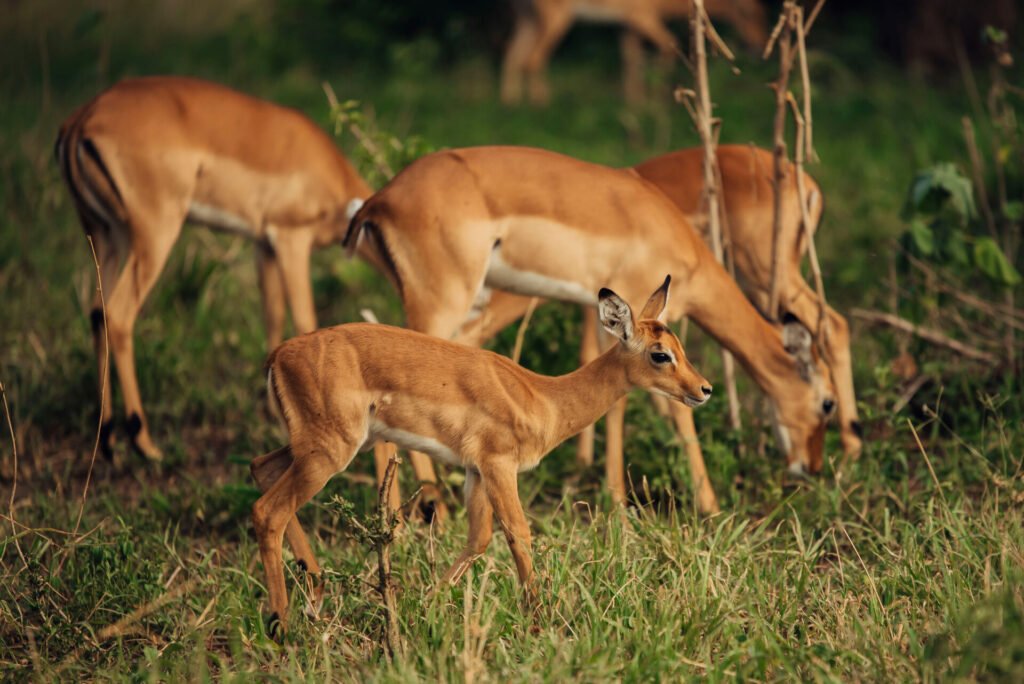
Contrary to the myth that animals disappear when the clouds roll in, the ecosystem shifts into high gear. The rains trigger the calving season, filling the plains with thousands of newborn antelopes and zebras. This abundance of vulnerable prey draws out lions and cheetahs, offering dramatic sightings that rival any dry month.
Locating discounted safari lodges requires geography knowledge, as the rains hit different countries at different times. Locking in the best deal starts with looking at the specific calendar for East Africa.
East Africa’s Best Value Months: Saving in the Serengeti and Masai Mara
East Africa, home to the iconic Serengeti and Maasai Mara, often presents the steepest financial barrier for aspiring safari-goers. While the dry season attracts massive crowds and premium pricing, shifting your dates to the region’s “Long Rains” can unlock access to these world-class parks for a fraction of the cost. From March through May, heavy downpours rejuvenate the parched savannah, turning the landscape into a photographer’s dream and forcing luxury camps to drop their rates significantly to attract guests during the quietest time of the year.
Target these specific windows for the best value months for Masai Mara and Serengeti trips:
- April (Highest Savings): Often the cheapest month for Serengeti migration viewing, with lodge discounts reaching 50% due to peak rainfall and muddy roads.
- May (Lush Landscapes): Offers emerald green scenery and excellent value as the heavy rains begin to taper off toward the end of the month.
- November (Short Rains): Provides a “middle ground” budget option, featuring brief afternoon showers and lower rates before the December holiday price spike.
Many travelers fear that skipping peak season means missing the Great Migration, but the herds do not vanish when the clouds roll in. During the wet months, wildebeest congregate in the southern Serengeti for the calving season, an event that offers distinct advantages over the chaotic river crossings. You can witness thousands of newborns taking their first steps surrounded by predators, all without the convoy of forty jeeps that characterizes the dry season in the north.
Choosing between these wet seasons depends on your tolerance for mud versus your desire for maximum savings. However, weather patterns on the continent are not uniform. While the rains are falling in Kenya and Tanzania, the seasonal calendar flips completely as you move further down the continent, creating affordable safari destinations in Africa that rely on a totally different timeline.
Southern Africa’s Low Season Secrets: Exploring Kruger and the Okavango
Crossing the border into Southern Africa requires a mental shift because the seasons effectively work in reverse compared to the Northern Hemisphere. While Europe and North America shiver through winter from November to March, countries like South Africa and Botswana experience their summer, which brings heat, dramatic thunderstorms, and the region’s lowest prices. This period creates a massive opportunity for budget-conscious travelers because the impact of weather on safari pricing is drastic; demand plummets as temperatures rise, forcing luxury lodges to offer rates that would be unthinkable during the dry winter months of June through August.
Nowhere is this value more apparent than in Botswana, often cited as the most exclusive safari destination, where the rainy months are beautifully branded as the “Emerald Season.” During this time, the usually arid Kalahari desert transforms into a lush grazing ground that attracts vast herds of migrating zebras, offering a unique spectacle distinct from the famous predator chases of the dry season. High-end private concessions, which normally charge thousands per night for exclusivity, suddenly become accessible to a wider demographic, allowing you to experience top-tier luxury without the five-figure invoice.
For those strictly prioritizing the bottom line, South Africa frequently ranks as the cheapest African country for safari due to the accessibility of self-drive options. Securing Kruger National Park off-peak rates during the summer means accepting a specific trade-off: the bush becomes thick and verdant, making it slightly more challenging to spot leopards or lions hiding in the tall grass compared to the barren winter landscape. If the thought of dense foliage or summer humidity feels like too much of a compromise, there is a middle ground that balances clear views with moderate savings.
The “Shoulder Season” Strategy: Balancing Peak Wildlife with Mid-Range Pricing
If the extremes of heavy rain or sky-high prices don’t appeal to you, the “shoulder season” offers a perfect middle ground. This travel window sits directly between the wet and dry periods, giving you the best of both worlds: rates that are significantly lower than peak season, but weather that is far more predictable than the green season. This industry “Goldilocks” zone allows you to book an affordable safari without sacrificing comfort or wildlife visibility.
Timing is everything when aiming for these transition months. You can typically shave 20% to 30% off the total bill by booking just weeks before or after the peak rush, effectively lowering the average cost of African safari per day. To maximize value, target these specific windows:
- Early June: The rains have stopped, leaving the landscape green and dust-free, but the high-season crowds (and prices) haven’t arrived yet.
- October: As the dry season ends, animals are desperate for water and easy to spot, yet lodges often drop rates before the November rains.
- Early December: A brief “lull” window opens after the spring season but before the expensive Christmas holiday spike.
Beyond the financial savings, these weeks offer distinct shoulder season travel benefits regarding exclusivity. Lodges are rarely at full capacity, meaning you won’t be fighting for a view of a lion pride or sharing your jeep with a full roster of strangers. However, if shaving 20% off the price isn’t enough to fit your budget, changing how you travel rather than just when can unlock even deeper savings.
Self-Drive vs. All-Inclusive: How Your Travel Style Cuts Costs in Half
Shifting your focus from the calendar to the steering wheel can produce the most dramatic price drops of your entire trip. While the classic safari image involves a uniformed guide driving a Land Cruiser, countries like South Africa and Namibia possess excellent paved roads and signage that allow you to rent a standard vehicle and explore national parks safely. This “self-drive” approach removes the high premiums of private guides and specialized transfer vehicles, potentially cutting your total expenses by half. A direct comparison of self-drive safari vs guided tour costs shows that paying your own daily conservation fees at the gate and staying in public rest camps is drastically cheaper than the daily rates charged by private luxury reserves.
For travelers who prefer to leave the navigation and animal tracking to experts, fixed-price bundles offer financial safety without the stress of driving in foreign terrain. Many all-inclusive budget safari packages are designed specifically to control expenses, grouping accommodation, meals, and game drives into a single upfront fee. These deals are frequently found in “overland” truck tours or budget-tier lodges, ensuring you never face surprise bills for dinner or park levies upon arrival. This method provides the relaxation of a fully guided experience while maintaining a strict, predictable cap on your total spending.
Regardless of whether you drive yourself or join a group, the specific company you book with significantly impacts the bottom line. International travel agencies often add substantial markup fees for their coordination services, whereas budget friendly safari tour operators based locally in hub cities like Arusha or Cape Town can often offer the same itinerary for hundreds of dollars less. Booking directly with these local experts cuts out the middleman and often provides more flexibility. With your timing selected and your travel style defined, you can combine these strategies into a concrete booking plan.
Your 3-Step Action Plan for Booking an Affordable African Safari
An African safari is no longer a distant, unaffordable dream. By understanding the seasonal rhythms of the continent, you can swap peak prices for the lush landscapes and exclusive feel of the Green Season, securing the cheapest African safari without sacrificing the magic of the wild.
Start your planning with this simple checklist:
- Target April or November for East Africa, or May for Southern Africa to catch the best price drops.
- Lock in low-season lodge rates by booking at least 6–9 months in advance.
- Compare routes into major hubs like Johannesburg or Nairobi for saving money on international flights to Africa.
Choosing the off-peak season isn’t about getting a “discount” experience; it is about outsmarting the crowds. You trade a little rain for private sightings and a greener, more vibrant adventure that fits your budget.