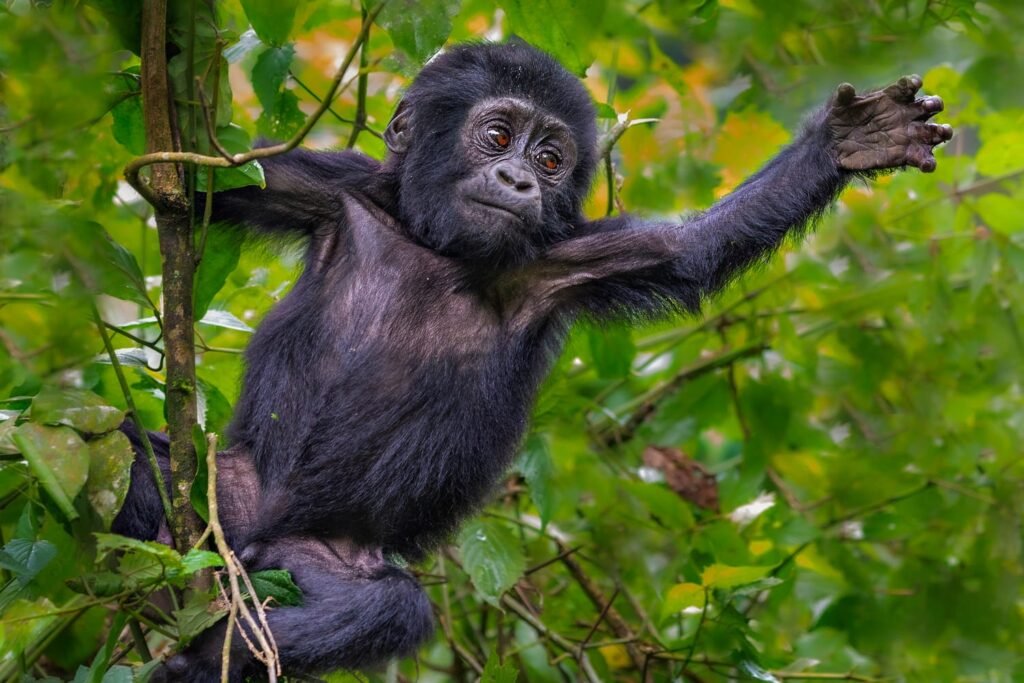
Imagine standing in the dense Bwindi Forest, where the morning mist can either serve as a mystical backdrop for photos or a prelude to a soaking downpour. For most travelers, the best month for gorilla trekking falls within the “Golden Window” of June to September or December to February. These periods align with the region’s two main dry seasons, offering firm ground that makes navigating the steep jungle slopes manageable for the average hiker. While mountain gorilla tours operate year-round, choosing these peak months ensures your attention remains on the wildlife rather than struggling for footing on a slippery trail.
Unlike temperate climates with four distinct seasons, the equatorial rain patterns in Rwanda and Uganda create a distinct cycle of wet and dry periods that dictates availability. Securing a gorilla trekking permit, the mandatory official pass required to visit a family of gorillas, requires strategic planning during the dry months; demand is high, and dates often sell out a year in advance. Conversely, the rainy “Green Season” offers better availability and lush scenery, though it demands a higher tolerance for mud and unpredictable showers.
Your final decision ultimately depends on balancing physical comfort with budget and exclusivity. Experienced guides note that while dry weather offers easier hiking, heavy rains can actually drive gorillas to lower altitudes to feed on bamboo, potentially shortening your trek. The following sections explore the specific trade-offs of each season, helping you decide if the premium price of a dry trek is necessary or if the adventurous, quieter wet season is your perfect match.
Why June to September is the ‘Golden Window’ for Gorilla Trekking
While you cannot completely control the weather in a high-altitude rainforest, choosing the long dry season, roughly June through September—gives you the best command over your footing. Since these primates live on steep volcanic slopes, “dry” doesn’t mean arid; you might still encounter a light mist. However, the ground is significantly firmer during this window, transforming what could be a slippery slide into a manageable hike. This accessibility makes it the undisputed peak season for mountain gorilla tours, especially for travelers concerned about physical endurance.
Visibility improves dramatically when the heavy rains subside. In wetter months, the undergrowth explodes with greenery, creating a dense curtain that can obscure your view of the family. During the dry season, that vegetation recedes just enough to offer clear lines of sight. If you are hoping for that perfect portrait without a fern blocking the Silverback’s face, this period is often cited as the best month for gorilla trekking in Uganda or Rwanda.
Because the conditions are optimal, competition for access is fierce. Permits are strictly limited to protect the families usually just eight visitors per group, per day. Securing a slot in July or August is comparable to booking front-row concert tickets; demand far outstrips supply. One of the most vital gorilla trekking tips is to follow the “12-month rule”: aim to book your permits a full year in advance to guarantee your spot.
Traveling during this “Golden Window” offers three distinct advantages:
- Stable Terrain: Dry trails reduce the risk of slips, allowing you to focus on the surroundings rather than your feet.
- Photographic Clarity: Thinner vegetation provides sharper lighting and unobstructed angles for your camera.
- Health Comfort: Drier air generally means fewer mosquitoes and lower humidity, reducing fatigue on the trail.
If your schedule doesn’t allow for a summer trip, or if permits are already sold out, there is a second opportunity later in the year that offers a different kind of magic.
The December to February Secondary Dry Season
Travelers seeking a winter escape often find a reliable haven between mid-December and February. Known as the “short dry” season, this interval offers a respite from heavy rains, making trails navigable just as families worldwide embark on holiday vacations. Because this window aligns with the Christmas and New Year break, lodges fill up quickly despite the slightly higher chance of rainfall compared to July. It creates a vibrant, festive atmosphere in the trekking hubs, though it requires the same advance booking strategy as the peak summer months to secure a permit.
Visual conditions during this time are arguably superior for capturing the perfect shot. The intermittent rains tend to scrub dust from the atmosphere, resulting in crisp, high-contrast mountain views that frame the primates beautifully. Beyond the gorillas, this is the prime season for birdwatchers; the forests teem with migratory species escaping the European winter, adding flashes of color to the canopy that you simply won’t see in June. For those debating when the dry season is in Rwanda or Uganda for maximum biodiversity, this specific window provides a compelling answer.
While generally sunny, this period retains a refreshing unpredictability compared to the long dry season. The ideal month is ultimately subjective; some visitors prioritize the driest possible boots, while others chase the vivid blue skies of January. However, if high prices and permit scarcity feel like barriers to your dream trip, the upcoming “Green Season” offers a radically different experience where the challenges of mud are offset by significant financial perks.
How the Rainy Season Lowers Costs and Shortens Your Trek
While heavy rain might sound like a dealbreaker for a hiking trip, the wet months of April, May, and November hold a secret advantage for your legs. During this period, fresh bamboo shoots—a sugary delicacy for primates, sprout rapidly at the base of the mountains. Instead of climbing to the freezing summits to forage, gorilla families often descend to the lower slopes to feast. This biological shift means your trek could be significantly shorter and less strenuous than in the dry season, trading a steep, lung-burning climb for a muddy but quick walk to the wildlife.
Beyond the physical benefits, this period represents the cheapest time for gorilla permits, packages, and accommodation. Luxury lodges that charge premium rates in August often lower their prices to attract visitors during the quiet months, a practice known as “Green Season” pricing. This allows budget-conscious travelers to stay in high-end properties that would otherwise be out of reach, ensuring that after a wet day in the jungle, you return to a warm fire and five-star service.
Solitude is the final, often overlooked perk of gorilla trekking during the rainy season. You might find yourself in a trekking group of two rather than the standard eight, offering an unobstructed view of the Silverback without jostling for camera angles. If you don’t mind waterproof gear, the trade-offs are compelling:
- Low season trekking discounts in East Africa often apply to luxury lodging, cutting trip costs significantly.
- Last-minute permit availability allows for spontaneous booking.
- Empty trails provide a private, “VIP” wilderness experience.
- Lower-altitude grazing by gorillas can reduce hiking duration by hours.
However, rain falls differently across borders; recognizing the subtle climate differences between Uganda and Rwanda is vital before booking your permit.
Uganda vs. Rwanda: Climate Differences That Matter
Although these neighbors share a border, the seasons for gorilla trekking in Uganda and Rwanda are shaped by distinct landscapes that handle precipitation differently. Uganda’s Bwindi is a true rainforest—dense, humid, and aptly named “Impenetrable.” The thick canopy here acts as a natural umbrella, catching light showers before they hit the ground, but it also traps moisture, creating a steamier environment. In contrast, Rwanda’s Volcanoes National Park consists of open bamboo zones on high-altitude slopes. You are more exposed to the elements here, meaning you might get wetter faster during a downpour, but the porous volcanic soil drains much quicker than the deep, lingering mud of the Ugandan jungle.
Temperature is the second dividing factor, largely driven by elevation differences. Rwanda’s treks start at a higher baseline and climb steep volcanic cones, resulting in much cooler mornings where seeing your breath is common. If you are sensitive to the cold, the biting mountain air at 3,000 meters might be a shock. Conversely, Bwindi Impenetrable Forest weather patterns tend to be warmer and muggier due to lower starting altitudes. This difference matters immensely when packing; a Rwandan trek demands thermal layers, while a Ugandan hike is often a battle against sweat and humidity.
Ultimately, your choice depends on whether you prefer the open, cooler air of the volcanoes or the sheltered, tropical heat of the forest. Rwanda’s open slopes generally provide brighter lighting conditions, whereas Bwindi’s shadowy undergrowth creates a moodier atmosphere. Regardless of the location, travelers often worry that cloudy skies will ruin their pictures, yet professional photographers actually prefer these conditions. Recognizing that optimal conditions for gorilla photography rely on soft light rather than harsh sun is the final key to capturing the perfect shot.
How to Capture Professional-Grade Photos in Overcast Weather
Most vacationers pray for blue skies, but when tracking dark-furred primates, clouds are actually your best friend. Direct sunlight creates harsh contrast, often turning a silverback’s face into a black void while overexposing the surrounding leaves. Overcast weather provides optimal photography conditions by acting like a giant natural softbox; the diffused light eliminates hard shadows, allowing you to capture the intricate texture of the fur and the deep amber color of their eyes without struggling against the sun.
Beyond lighting, the moisture in the air significantly impacts the quality of your images. During the dry season, dust can leave a flat haze over the landscape, but the rains wash this away, resulting in vibrant, saturated emerald backdrops. Travelers often worry about visibility in the wet season, but the gorillas remain active and visible even in the rain; they often huddle closer together for warmth, offering unique opportunities for family portraits that you simply cannot get in the heat of the dry season.
Capturing these shots requires equipment that can handle low light and moisture. While the “Green Season” offers easier permit availability, it demands that you protect your gear aggressively.
- Lens Hoods: Essential for shielding the glass from stray raindrops.
- Waterproof Dry Bags: A roll-top bag is the only guarantee against sudden tropical downpours.
- High ISO Settings: Be ready to shoot at ISO 1600 or higher to compensate for the dark forest canopy.
With your camera secured against the dampness, your next priority is ensuring your own body can handle the slippery terrain.
Preparing for the Mud: Gear Essentials
Don’t let the term “dry season” fool you into packing light sneakers. These national parks are rainforests first and hiking destinations second, meaning the ground remains permanently damp under the thick canopy. Whether you visit in July or November, preparing for rainforest hiking starts with accepting that you will encounter mud. In the wetter months, the trails can transform into slick slides, requiring sturdy ankle support to navigate the steep, tangled roots safely.
To keep your footing secure and your comfort levels high, three specific items should top your packing list regardless of the forecast.
- Waterproof Hiking Boots: Essential for grip and keeping socks dry when stepping into deep mud puddles.
- Gaiters: These knee-high fabric guards strap over your boots to stop water, debris, and stinging nettles from sliding into your shoes—a game-changer for avoiding mud on gorilla trails.
- Gardening Gloves: Cheap hardware-store gloves are superior to expensive thermal gear here, protecting your hands when you inevitably grab thorny vegetation for balance.
Mastering your gear is only half the battle; how you move on the mountain matters just as much. One of the most practical gorilla trekking tips is to use the “three points of contact” rule, keeping two feet and one walking stick anchored whenever you navigate steep equatorial slopes. This stability ensures you have the energy left to enjoy the encounter once you reach the family. With your physical preparation sorted, the final step is aligning these logistics with your wallet and calendar.
How to Pick Your Perfect Month: A 3-Step Decision Plan
You can now move beyond the confusing calendar of wet and dry seasons and deploy a clear strategy for choosing the best month for gorilla trekking. Instead of guessing, confidentially match your physical fitness to the trail conditions and your budget to the season. Whether you choose the ease of the dry season or the wild beauty of the green season, you are ready to navigate the logistics of the rainforest.
To lock in your decision, choose the winner for your specific travel style:
- Best for Weather: July to August (Dry trails, easiest hiking).
- Best for Budget: April to May (Discounted lodges, lush photography).
- Best for Solitude: November (Private moments, few crowds).
Ultimately, ask yourself: are you prioritizing dry boots or a quieter forest? While rain is possible any day in the tropics, silverback behavior remains majestic year-round; the families are always there, waiting to be found. Since popular mountain gorilla tours sell out quickly, your next step is critical. Check permit availability today—ideally 6 to 12 months out—to ensure your preferred dates are ready when you are.