Scan a map from sixty years ago, and you won’t find Tanzania. The modern name is actually a portmanteau, a linguistic blend, created by the 1964 union of Tanganyika and Zanzibar. While this recent merger answers how old is the state of Tanzania, the ancient origins of the Swahili Coast civilization reveal a history far deeper than the borders drawn today.
Why the Kilwa Sultanate Was the Medieval Superpower of East Africa
Long before modern borders existed, the Kilwa Sultanate reigned as the undisputed powerhouse of the East African coast. A sultanate is essentially a wealthy kingdom centered around a city-state, similar to how Singapore operates today but ruled by a Sultan. From the 13th to the 15th century, this empire controlled the Indian Ocean trade routes, becoming so wealthy that it minted its own gold currency. It wasn’t just a remote trading post; it was a sovereign state that rivaled European powers of the same era, serving as the earliest organized government structure in what we now call Tanzania.
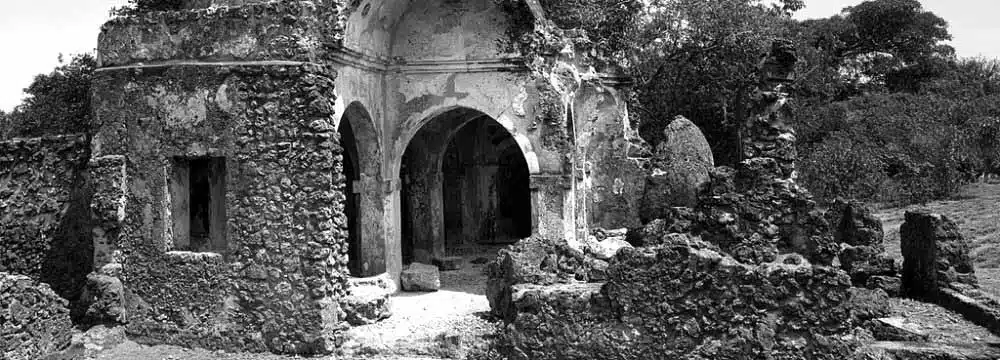
Physical proof of this golden age still stands on Kilwa Kisiwani, an island just off the mainland. The ruins of the Great Mosque and the Palace of Husuni Kubwa display advanced coral-stone architecture, a unique building method where laborers cut coral from the living reef and set it with lime mortar. These structures were designed to withstand centuries of monsoon winds. Today, these ruins are protected as a UNESCO World Heritage site, offering a tangible link to a time when this coast was the center of the economic world.
This prosperity relied on a massive commercial network often described as the “Indian Ocean Silk Road.” Merchants used the reliable trade winds to exchange high-value goods that connected Africa to the farthest reaches of Asia. The port bustled with ships loading and unloading three primary commodities:
- Gold mined from the interior, particularly from Great Zimbabwe.
- Spices and ivory destined for Middle Eastern markets.
- Chinese porcelain and silk brought by long-distance traders from the East.
How the 1964 Union Transformed Ancient Kingdoms into a Modern Nation
While the Kilwa Sultanate demonstrated ancient power, the modern nation of Tanzania is surprisingly young. After colonial powers drew new borders over ancient kingdoms, much like placing a transparent sheet over an old map—independence returned in the 1960s. The definitive shift occurred on April 26, 1964, when the mainland state of Tanganyika and the island state of Zanzibar formed a political union. This wasn’t a conquest, but a strategic merger designed to secure sovereignty for both regions.
This history of the Tanganyika and Zanzibar union resulted in a blended identity that respected both partners. Even the country’s name serves as a permanent reminder of the agreement: “Tan” from Tanganyika and “Zan” from Zanzibar were combined to coin “Tanzania.” This evolution of Tanzanian national identity allowed the republic to reclaim its independence while preserving the deep cultural roots of the coast. To experience this journey from medieval empire to modern republic, you must visit the sites where these historical layers visibly overlap.
Where to Witness the Living History of Tanzania’s Oldest Roots
You can now look past modern borders to recognize a land where humanity itself began. While the nation is politically young, its roots stretch from the Olduvai Gorge archaeological findings to the ancient civilizations of the Swahili Coast. To truly grasp this depth, plan a visit to Kilwa Kisiwani or Stone Town. Exploring these UNESCO World Heritage sites allows you to stand amidst the ruins of wealthy empires that thrived long before the current map was drawn.