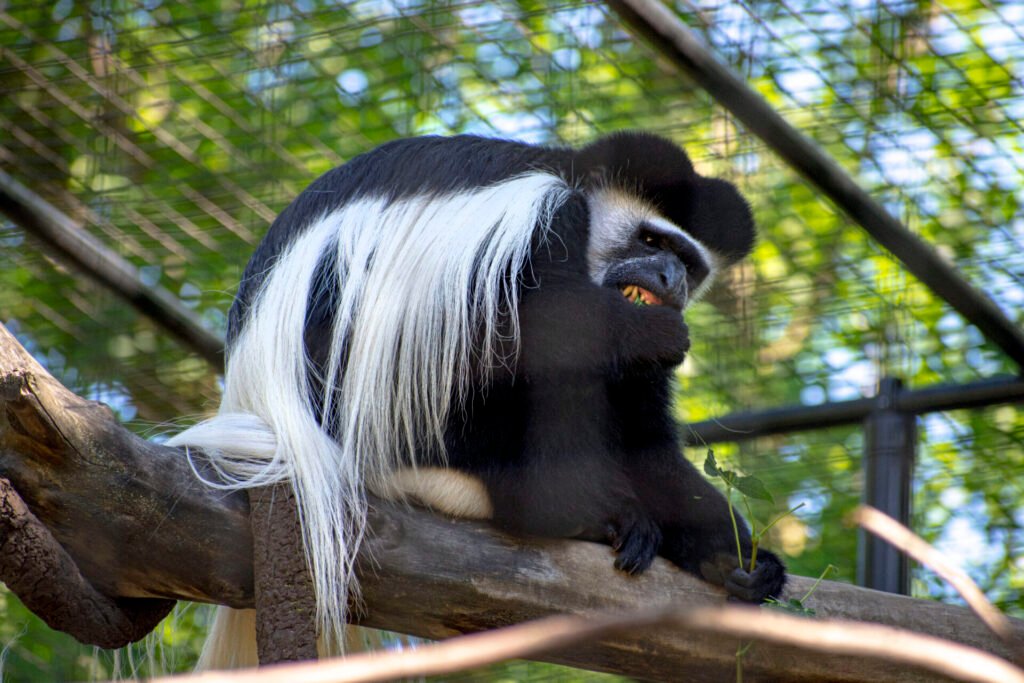
Imagine a primate resembling a high-fashion model, draped in a flowing white cape over jet-black fur. These black and white colobus monkeys are specialized African rainforest canopy dwellers, often identified as the Mantled Guereza. Yet, biology reveals a strange trade-off behind their acrobatics: to master life in the high trees, they evolved to lose their thumbs entirely.
The Four-Fingered Hook: How Mantled Guerezas Master the Art of the 50-Foot Leap
If you looked closely at a Mantled Guereza’s hand, you might assume the animal suffered an accident. Instead of a typical thumb, this species possesses only a tiny, vestigial nub. This isn’t a handicap; it is a high-speed adaptation. By eliminating the digit, their hands function like four-fingered hooks rather than mitts. This specialized shape prevents a thumb from getting snagged or jammed when catching branches, effectively explaining why these monkeys lack thumbs.
These natural hooks allow the Colobus to master arboreal locomotion and leaping abilities that shame Olympic athletes. Functioning like biological paratroopers, they launch themselves downward in breathtaking fifty-foot drops, using their long tails as rudders to steer through the air. Yet, surviving here requires more than acrobatics; it demands the ability to process tough leaves, a task requiring an internal system as specialized as their hands.
Inside the Monkey’s Bio-Reactor: Why a Multi-Chambered Stomach is a Leaf-Eater’s Secret Weapon
While many primates scramble for quick energy from sugary fruits, the Colobus utilizes a digestive superpower closer to a cow’s than a chimpanzee’s. To understand how leaf-eating primates digest cellulose, look inside their specialized gut: they possess a massive, multi-chambered stomach that functions like a biological fermentation tank. Bacteria within these chambers break down tough plant fibers and neutralize toxins, a process that highlights the functional similarities between their multi-chambered stomachs and ruminant digestion.
This internal bio-reactor grants them access to a pantry unavailable to other monkeys. Their specialized gut allows them to thrive on a high-fiber menu consisting of:
- Mature leaves and seeds
- Lichen, which plays a specific role in primate diets
Digesting this heavy foliage requires long periods of rest, creating a sedentary lifestyle that influences how they defend their families.
White Coats and Territorial Roars: The Secret Social Language of the Canopy
Life in the canopy revolves around a tight-knit family unit. Within this primate troop structure, newborns are born entirely white, standing out dramatically against their dark-furred parents. This unique phase of infant development acts as a visual signal, encouraging other females to share babysitting duties in a communal practice called allomothering.
Beyond shared care, the troop relies on sound for safety. At dawn, males emit a rattling roar, using these loud vocalizations to defend territory and create an audio boundary that keeps rival groups at bay. This warning system also alerts the family to predators like eagles, ensuring the vulnerable infants remain safe high above the ground.
Safeguarding the Sky-Walkers: Why the Future of the Colobus Depends on the Canopy
These distinct primates are vital to the ecosystem, but rapid habitat loss in sub-Saharan Africa threatens their future. Recognizing species within the Cercopithecidae family, particularly the critically endangered Piliocolobus kirkii, is the first step toward conservation. Understanding these unique monkeys turns casual observation into advocacy for the rainforest’s health.