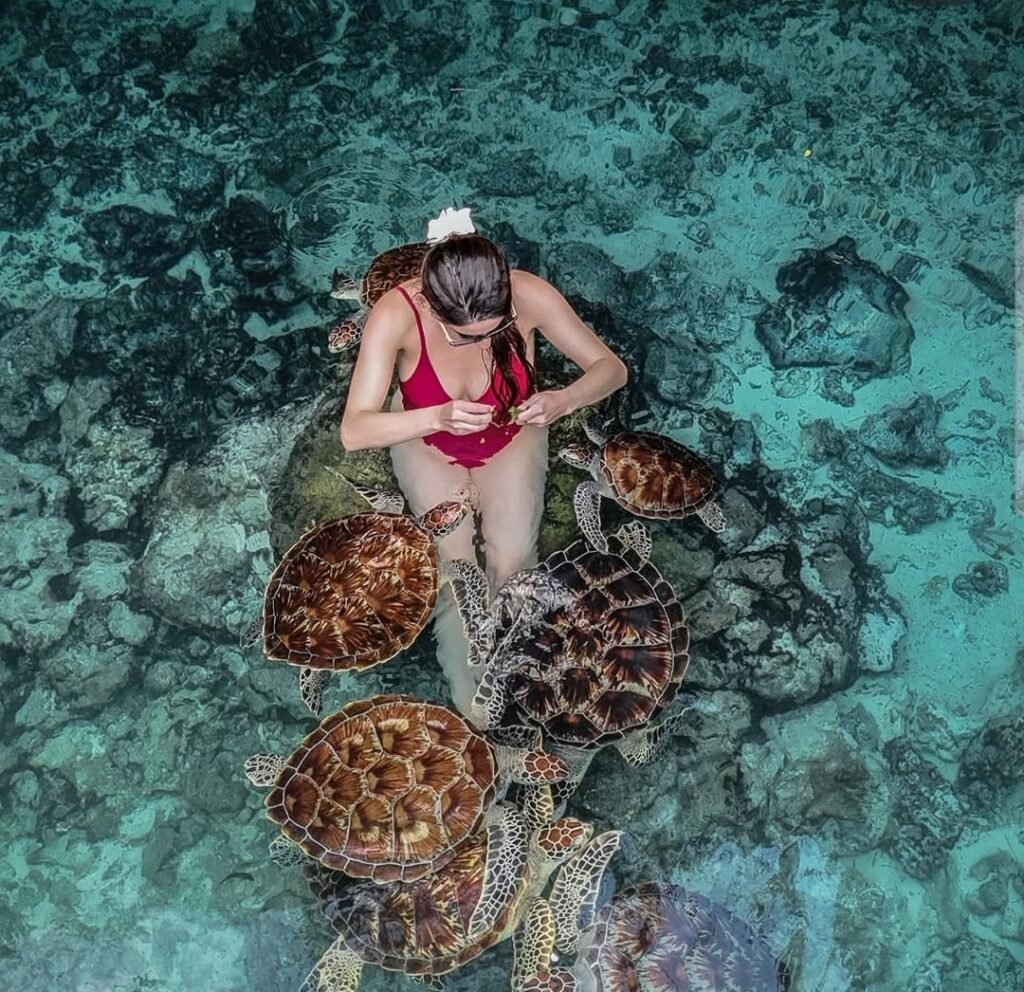
Imagine the Indian Ocean waters of Nungwi, so clear they look like liquid turquoise, parting to reveal a creature that has roamed the seas since the dinosaur age. While many travelers arrive in Zanzibar seeking the perfect vacation photo, nothing quite prepares you for the moment a massive Green Turtle glides silently past your mask. It is a meeting of two worlds, separated only by a thin layer of glass and salt water.
Reaching these aquatic encounters often involves a short journey on a dhow, a traditional wooden sailing boat used by Zanzibaris for centuries. These vessels, with their iconic triangular sails, serve as more than just transport; they represent the island’s deep historical connection to the sea. As the wooden hull cuts through the waves, the anticipation builds, shifting your mindset from a simple tourist to an explorer entering a marine home.
Local conservation groups, such as those at the Mnarani Marine Turtle Conservation Pond, emphasize that these lagoons are vital sanctuaries rather than simple attractions. The turtles found here are often rescued or recovering, making every encounter a privilege rather than a right. Understanding this context transforms a casual swim into a meaningful interaction with an endangered species.
Swimming with turtles in Zanzibar offers a rare chance to witness nature up close, but the real magic happens when we learn to observe without disturbing. By following a few simple guidelines, you ensure that this underwater world remains vibrant for future generations, making your visit safe, memorable, and respectful of the ocean’s gentle giants.
Mnarani Marine Turtle Conservation Pond vs. Baraka Aquarium: Which Experience Matches Your Values?
Nungwi, the northern tip of Zanzibar, hosts two distinct facilities that travelers often confuse, yet their missions differ in ways that significantly impact your visit. While Mnarani and Baraka are neighbors geographically, they offer different approaches to interacting with marine life. Mnarani operates with a strong focus on the long game of releasing animals back into the wild, acting as a true sanctuary, whereas Baraka provides a natural tidal pool environment specifically designed for the popular “swimming with turtles” experience.
Community-led conservation drives the operations at the Mnarani Marine Turtle Conservation Pond. Think of this facility less like an attraction and more like a recovery hospital. Local fishermen bring turtles accidentally caught in nets here to be nursed back to health rather than sold for meat. Because the priority is rehabilitation, the rules are stricter; the goal is to limit human dependency so these Green and Hawksbill turtles can eventually return to the open ocean. This authentic commitment to “release” over “keep” makes it a favorite for travelers focused on ecological impact.
To help you choose the experience that aligns with your travel values, here is how the two locations compare:
- Mnarani Conservation Pond: Primarily focuses on rehabilitation, education, and an annual release event (usually in February); activities are mostly limited to viewing and feeding from the edge to reduce animal stress.
- Baraka Aquarium: Operates as a natural tidal lagoon focusing on accessible tourism; allows visitors to swim directly alongside the turtles, making it the go-to spot for those seeking that underwater connection and photo opportunity.
Your decision ultimately depends on whether you prioritize an immersive swim or a strictly educational observation. Both sites contribute to the local economy and raise awareness about endangered species, but understanding the distinction ensures you don’t arrive at the sanctuary expecting a swim, only to find it is a recovery day for the patients. Once you have selected your destination, the next step is timing your arrival perfectly to navigate the tides and entry fees.
Navigating the Nungwi Natural Aquarium: Entrance Fees, Best Times, and Insider Logistics
Arriving at the Nungwi Natural Aquarium entrance fee counter without cash is a common rookie mistake that can delay your swim. While parts of the island are modernizing, these small conservation outposts rely heavily on physical currency, typically charging around $10 USD or the equivalent in Tanzanian Shillings per person. This contribution serves a dual purpose: it directly funds the fresh seaweed diet for the residents and maintains the natural enclosure, so keeping small bills handy ensures your entry is as smooth as the calm lagoon waters.
The best time to see sea turtles in Zanzibar isn’t dictated by the clock on the wall, but by the rhythm of the ocean. Because the aquarium acts as a natural extension of the sea rather than a concrete tank, the water level rises and falls in sync with the Indian Ocean tides. Aim to visit during high tide, when the water is deep enough for the turtles to glide freely and for you to swim without scraping your knees on the rocky bottom. Checking a local tide chart before heading out saves you from staring at a shallow pool during standard Zanzibar turtle sanctuary visiting hours.
Finding the location near the Nungwi lighthouse is straightforward, but navigating the actual interaction requires more finesse than simply jumping in. Once you enter the water, you will likely be surrounded by dozens of Green Turtles eager for the algae visitors are given to feed them. This close proximity allows you to see the intricate, sun-dappled patterns on their carapace (hard upper shell), but the intimacy of the moment presents a temptation that brings us to the most critical part of your visit: resisting the urge to reach out.
Mastering the No-Touch Rule: How to Interact with Turtles Safely Without Stressing Them
When a curious visitor reaches out to pet a passing turtle, they aren’t just making contact with a wild animal; they are potentially introducing foreign bacteria to a delicate immune system. Sea turtles haven’t developed defenses against the microbes found on human skin or the chemical residue from our lotions. Evaluating the safety of swimming with turtles involves considering the health of the animal as much as the swimmer, ensuring we don’t transfer harmful pathogens that could lead to infection.
Many travelers mistakenly believe the turtle’s carapace is as unfeeling as a rock, but this living bone structure is surprisingly sensitive. Beneath those beautiful, sun-dappled scutes (scales), the shell contains nerve endings that allow the turtle to feel pressure and pain, much like you feel a touch through your fingernail. Learning how to interact with turtles safely while snorkeling means understanding that even a gentle pat can cause stress, which weakens their health over time.
To ensure your encounter helps rather than harms, stick to these guidelines when feeding sea turtles at Nungwi Village:
- Maintain Space: Keep a two-meter buffer so the turtle always has a clear path to the surface to breathe.
- No Flash: Avoid flash photography, which can startle the animals and disrupt their orientation.
- Flat Palms: Offer algae with a flat, open hand to prevent accidental nips to your fingers.
- Rinse First: Wash off chemical sunscreens before entering the lagoon to protect water quality.
Mastering these sanctuary manners prepares you for the next level of marine observation. While the natural aquarium guarantees an up-close experience, the dynamics shift entirely when you leave the enclosure to look for free-roaming populations in the open ocean.
Spotting Turtles in the Wild: Why Kendwa and Nungwi Offer Different Marine Adventures
Stepping out of the Baraka Aquarium changes the game from a controlled encounter to a marine safari. While Nungwi is famous for its tidal flats and sanctuary, examining the differences between Nungwi beach and Kendwa reveals that Kendwa’s deeper waters often serve as the better launchpad for excursions to Mnemba Atoll. Here, the goal shifts from interaction to observation. In the wild, pelagic (open ocean) turtles are far more skittish than their sanctuary cousins, often diving deep at the first sound of splashing or heavy boat vibrations.
Most wild encounters happen around Mnemba, a protected coral atoll, essentially a ring-shaped reef that acts as a nursery for marine life. The boat ride itself requires mindfulness; responsible captains cut their engines early to drift toward spotting zones, preventing underwater noise pollution that stresses wildlife. Unlike the calm, enclosed lagoon, ocean currents here can be unpredictable, meaning you need to be comfortable swimming in choppy water to catch a glimpse of a Green Turtle grazing on seagrass.
Comparing wild turtle spotting with sanctuary visits helps manage your expectations before booking a tour:
- Sighting Certainty: Sanctuary offers a 100% guarantee; Wild varies by season and luck.
- Water Depth: Sanctuary is often waist-deep; Wild ranges from 3 to 10 meters over reefs.
- Engagement Style: Sanctuary allows feeding; Wild requires strictly passive observation from a distance.
Swimming with the turtles in Zanzibar—whether captive or wild—requires preparation. Once you’ve chosen your adventure, the next step is ensuring your kit won’t let you down mid-swim.
Essential Packing List: Gear Up for a Comfortable and Safe Snorkeling Trip
Preparing for the Indian Ocean involves more than just grabbing a swimsuit. Because Zanzibar lies so close to the equator, the sun is deceptively strong, making protection vital. However, standard lotions often contain chemicals like oxybenzone that act as toxins to coral reefs. Switching to a mineral-based, “reef-safe” sunscreen ensures you don’t inadvertently damage the turtles’ feeding grounds while protecting your own skin.
When deciding what to pack for a snorkeling trip, prioritize items that handle both the salt and the sun. A standard beach bag should upgrade to a functional kit:
- Reef-safe sunscreen: Blocks UV rays without releasing toxins into the water.
- Rash guard: A swim shirt that prevents sunburn better than lotion alone.
- Waterproof phone pouch: Keeps electronics dry while capturing underwater photos.
- Anti-fog spray: Prevents mask condensation from blocking your view.
Small choices in your luggage contribute directly to the health of the marine environment. By minimizing chemical pollutants and physical waste, you align your visit with the goals of local conservation programs. This mindful preparation sets the stage for understanding the deeper impact of your ticket price on the survival of endangered species.
Conservation in Action: Why Your Visit Supports Hawksbill and Green Turtle Survival
Distinguishing between the gentle giants you encounter creates a deeper connection than simply seeing “a turtle.” Most visitors to Nungwi swim with Green Turtles, recognizable by their smooth, teardrop-shaped shells and grazing habits that act like lawnmowers for healthy seagrass beds. In contrast, the critically endangered Hawksbill Turtle uses a sharp, bird-like beak to extract sponges from coral crevices. Recognizing these physical traits transforms a casual swim into a firsthand look at specialized survival tactics developed over millions of years.
Your entrance fee does far more than maintain the facilities; it actively shifts the local economy from exploitation to protection. Historically, these reptiles were hunted for meat and decorative shells, but communities now realize that a live turtle generates sustainable income through eco-tourism. This financial incentive directly funds anti-poaching patrols and community education, ensuring that the impact of tourism on Zanzibar sea turtle populations remains a net positive for the ecosystem.
These efforts culminate during the delicate nesting cycles managed by local sanctuaries. By raising hatchlings until they are large enough to evade common predators, conservationists give these animals a fighting chance to reach adulthood. This dedication supports broader Hawksbill turtle conservation efforts in East Africa, creating a stable future that requires careful planning to visit responsibly.
Planning Your Ethical Adventure: A Step-by-Step Action Plan for a Responsible Encounter
You likely started this journey looking for the perfect photo, but you now have the tools to ensure your experience creates a lasting positive impact. Instead of simply being a tourist, you are prepared to enter the water as a respectful guest who understands that the true magic lies in observing these ancient creatures on their terms, not ours.
To guarantee your time swimming with turtles in Zanzibar is safe and sustainable, follow this simple plan:
- Book early to secure a slot that avoids peak overcrowding times.
- Pack reef-safe sunscreen to protect the turtles’ delicate water quality.
- Respect the distance by keeping your hands to yourself and floating calmly.
- Donate explicitly to the sanctuary to fund ongoing rehabilitation costs.
- Share the ethical message of “look, don’t touch” with fellow travelers.
What if your visit was the specific reason a rescued Green Turtle made it back to the wild? That is the power of ethical satisfaction. By actively supporting Zanzibar marine life conservation programs like the Mnarani project, you ensure these prehistoric navigators survive for future generations. Your ticket isn’t just for a swim; it is an investment in the ocean’s future.