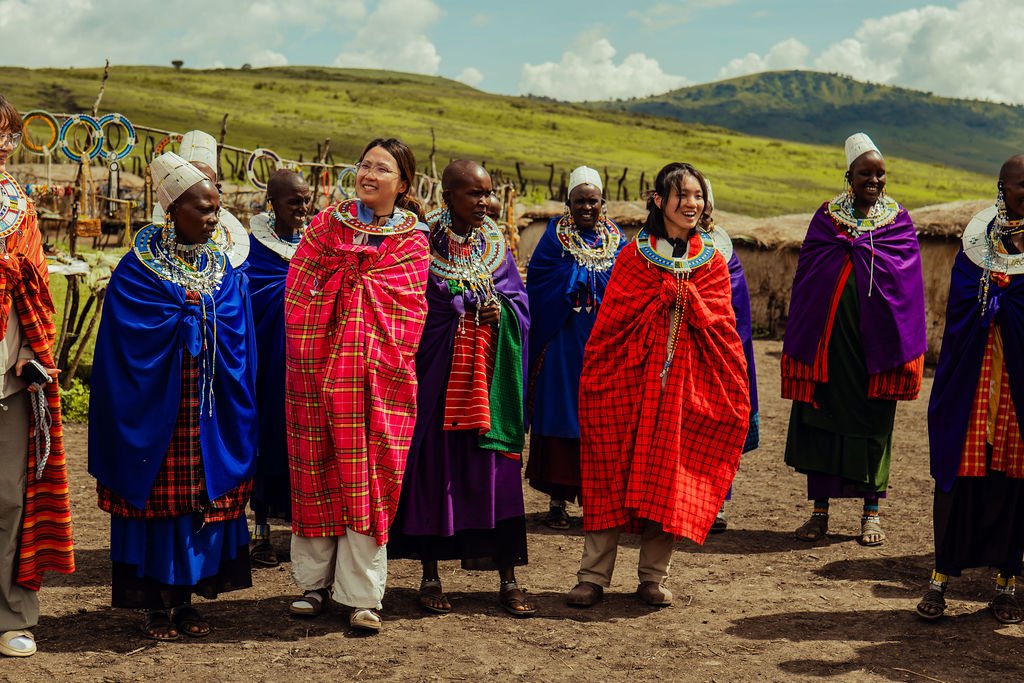
If you asked a traveler to sketch a typical Tanzanian, they would almost certainly draw a Maasai warrior wrapped in distinct red shuka cloth. Yet, despite their global fame, the Maasai actually represent less than 5% of the country’s population. Beyond the savannas featured in documentaries lies a vast human mosaic of over 120 distinct ethnic groups, ranging from the click-speaking Hadzabe hunter-gatherers to the Sukuma farmers who cultivate the southern shores of Lake Victoria.
In a region where ethnic diversity has often sparked conflict, Tanzania stands as a rare exception of stability. This peace is largely attributed to Ujamaa, a national philosophy introduced by the country’s first president that prioritized “familyhood” over individual tribal divides. A tribe here is not a separate political entity, but a massive extended family with its own dialect and traditions, all living cooperatively under one shared roof.
Exploring these cultures offers an insider’s perspective that moves past stereotypes to understand how ancient lifestyles, whether following herds, tilling the land, or foraging in the bush, adapt to the modern world. This journey reveals how a nation of such staggering variety manages to speak with a single, unified voice.
How the ‘Great Migration’ Shaped Modern Tanzanian Identity
While it is easy to view Tanzania’s 120 tribes as a random collection, the country’s cultural map was actually drawn by two massive historical movements. Most ethnic groups trace their heritage to either the Bantu expansion or the arrival of Nilotic herders. Roughly 2,000 to 4,000 years ago, Bantu-speaking communities migrated from West and Central Africa to settle the fertile, rain-heavy regions. Later, the Nilotic peoples, groups originating from the Nile Valley, migrated south into the drier savannahs, bringing a distinct culture centered around livestock rather than the plow.
These migration patterns created two dominant lifestyles that still influence how rural communities operate today:
- Bantu Groups (e.g., Chagga, Sukuma): Historically settled farmers who build permanent homes; their traditional diet relies on crops like maize, bananas, and beans.
- Nilotic Groups (e.g., Maasai, Datoga): Traditionally semi-nomadic pastoralists who move with the seasons; their culture reveres cattle, with diets historically focused on meat and milk.
With such distinct origins and economic interests, you might expect constant friction, yet Tanzania remains remarkably peaceful thanks to a powerful “social glue”: Kiswahili. Originally a coastal trading language, it evolved into a neutral lingua franca, a bridge language that allows a cattle herder to trade with a crop farmer without either group imposing their tribal dialect on the other. This shared tongue paved the way for the prominence of the Bantu-descended farmers who make up the majority of the population.
Sukumaland Secrets: Inside the Traditions of Tanzania’s Largest Tribe
If you travel to the rocky outcrops south of Lake Victoria, you enter the domain of the Wasukuma (“People of the North”). As the largest of Tanzania’s ethnic groups, representing over 15% of the population, they serve as the economic backbone of the country’s cotton and cattle industries. Unlike the solitary stereotype of rural life, Sukuma farming is intensely communal. Neighbors frequently band together in cooperative work groups to plow vast fields, turning arduous labor into a social event fueled by collective song and rhythm.
These rhythms culminate in Sukumaland traditional dance and music, specifically the region’s most famous spectacle: the Bugobogobo, or Snake Dance. Historically performed by secret societies to attract crowds during the harvest season, this performance is a test of courage and medical knowledge rather than simple entertainment. A traditional Bugobogobo performance typically features:
- The Viongozi: Lead dancers who handle live, venomous snakes like cobras or mambas to demonstrate fearlessness.
- Medicinal Protection: The public application of herbal remedies believed to grant immunity to snake venom.
- Rhythmic Stamina: High-energy drumming that drives dancers into a trance-like state, sometimes lasting for hours.
Beyond the adrenaline of the dance, Sukuma society relies on a rigid, respectful hierarchy where elders hold the final say in community disputes. This disciplined, crop-focused lifestyle creates a stable food supply for the nation, contrasting sharply with the wandering spirit of their neighbors who look to the horizon.
Beyond the Shuka: The Complex Reality of Maasai and Datoga Pastoralists
While the Sukuma anchor themselves to fertile soil, the semi-arid plains of the Rift Valley demand a different strategy. Here, rainfall is too unpredictable for large-scale crops, so survival depends on mobility. Pastoralism is essentially an ancient form of asset management where wealth isn’t stored in banks, but on four legs. Moving cattle to follow seasonal rains is not aimless wandering; it is a calculated response to a harsh environment, allowing communities to convert dry grass into milk, meat, and blood to sustain life where farming often fails.
The most famous guardians of this lifestyle are the Maasai, though their reality is far more structured than standard tourist snapshots suggest. Society is organized by “age-sets,” a system similar to military cohorts that binds men together for life. The most pivotal stage is the Moran (warrior) phase, where young men live apart in bush camps to learn discipline, defense, and stewardship. This period is less about aggression and more about earning the right to become a responsible elder, ensuring that Maasai cultural heritage and traditions survive even as external pressures mount.
Often mistaken for their Maasai neighbors due to similar attire, the Datoga people offer a vital industrial counterpoint to the pure herding life. Known historically as fierce warriors, they are arguably the engineers of the steppe. Datoga pastoralist customs and metalworking skills allow them to recycle scrap metal—from old car springs to discarded pipes—into arrowheads, jewelry, and farming tools. This craftsmanship created a symbiotic trade relationship where the Datoga provided the hardware necessary for other tribes to hunt and protect their herds.
Today, these open horizons are shrinking. The impact of globalization on nomadic communities is visible as private fences cut across ancient grazing routes and climate change alters rain patterns. Yet, both groups are adapting, attempting to balance their mobile heritage with the demands of a modernizing nation.
The High-Altitude Innovations of the Chagga and Iraqw People
As the elevation climbs toward the snow-capped peaks, the survival strategy shifts from nomadic movement to intensive land engineering. The Chagga people have mastered this vertical landscape through the Kihamba system, a sophisticated method of agroforestry that mimics the natural rainforest structure. By planting tall trees to shade banana plants, which in turn shade coffee bushes, Chagga tribe coffee farming on Kilimanjaro thrives without clear-cutting the slopes. This tiered approach prevents soil erosion and ensures a steady food supply regardless of the season.
Coffee here is more than a cash crop; it is a ritual of hospitality that connects families to the global market. Visitors to the slopes often witness the labor-intensive transformation of red berries into a morning brew:
- Harvest and Dry: The cherries are pulped by hand and the beans are dried under the mountain sun.
- Roast: Beans are tossed in a heavy iron pot over an open fire until they turn a deep, oily black.
- Grind and Brew: The roasted beans are crushed rhythmically in a wooden mortar before being boiled with water.
West of Kilimanjaro, the Iraqw people developed a different kind of ingenuity to cope with the cool highlands and historical threats from raiding groups. Their traditional earthen houses were often built into hillsides or subterranean depressions, creating structures that were invisible to enemies and naturally insulated against the cold. This deep connection to the earth extends to the traditional medicine practices of the Iraqw, where specific highland roots are utilized for healing, showcasing a reliance on nature that predates modern agriculture.
Living History: The Hadzabe Hunter-Gatherers and the Roots of Language
While other tribes shaped the land to fit their needs through farming or herding, the Hadzabe adapted themselves to fit the land. Living near the saline waters of Lake Eyasi, this small population maintains a connection to human ancestry that predates agriculture. They do not raise livestock or plant crops; instead, the Hadzabe hunter-gatherer lifestyle relies entirely on what nature provides day-to-day. This existence is not a lack of development, but a specialized mastery of the environment, requiring an encyclopedic memory of seasonal berries, tubers, and game movements to survive without stockpiles.
Hearing a conversation around a Hadzabe campfire offers a unique auditory experience unlike anything else in the region. Their speech is punctuated by distinct percussive clicks made with the tongue and palate, a feature completely different from the Bantu or Nilotic tongues spoken by their neighbors. Linguists classify Hadza as a “language isolate,” meaning it is unrelated to any other known language family on Earth. This isolation highlights the critical importance of preserving indigenous languages, as the loss of such a dialect would erase centuries of specific ecological knowledge encoded within its vocabulary.
Unlike the hierarchical kingdoms found elsewhere in history, the Hadzabe operate without chiefs, kings, or formal ruling structures. This social framework is known as egalitarianism, a system where status is leveled and food is shared equally among all members of the camp. If a hunter brings down a baboon or collects wild honey, the bounty belongs to the community rather than the individual. This radical equality acts as a social insurance policy, ensuring that the vulnerable are fed even when their own foraging efforts fail.
Today, this ancient balance faces unprecedented pressure from the outside world. As neighboring groups expand their farms and cattle grazing ranges, the wild bushland the Hadzabe depend on is steadily shrinking, forcing a difficult negotiation between deep tradition and modern encroachment.
Coastal Fusions: The Shirazi, the Hehe, and the Art of the Makonde
The humid air of the Swahili Coast tells a story of trade rather than isolation. Here, the Zanzibari Shirazi ethnic origins reflect centuries of intermarriage between indigenous Bantu communities and Persian merchants from the Shiraz region of Iran. Unlike inland groups defined strictly by territory, Shirazi identity is built on this cosmopolitan blend, manifesting in unique stone architecture and a distinct Islamic culture that links Tanzania to the wider Indian Ocean world.
Moving inland to the Southern Highlands, we encounter a legacy of fierce independence. The social organization of the Hehe people is historically famous for its disciplined military structure, which allowed them to stage a formidable resistance against German colonization under the legendary Chief Mkwawa. While modern Hehe life centers on peaceful agriculture, their oral traditions preserve the memory of Mkwawa’s strategic intellect, reminding younger generations that their ancestors were defenders of their sovereignty, not merely subjects of an empire.
Further south near the Mozambique border, the Makonde people express their heritage through blackwood (mpingo) rather than stone or warfare. Makonde wood carvings and symbolism are globally prized for their intricate fluidity, particularly the abstract “Shetani” style. These carvings depict spirits from folklore, twisting natural forms to represent unseen forces. Common symbolic elements include:
- Distorted limbs representing the shapeshifting, chaotic nature of spirits.
- A single large eye symbolizing the spirit’s ability to see into a person’s soul.
- Merged figures illustrating the inability to separate the human world from the spirit world.
The Respectful Traveler’s Guide to Cultural Encounters
Viewing the tribes in Tanzania not as static museum exhibits, but as a living, breathing mosaic of over 120 distinct cultures changes the nature of travel. By understanding the delicate balance between ancestral traditions and modern national unity, you move beyond the role of a passive spectator. You possess the cultural literacy to recognize that preserving human heritage is about respect, not just capturing photos of exotic attire.
Transforming this awareness into responsible action requires seeking out ethical cultural tourism experiences that prioritize genuine interaction over staged performances. To ensure your visit protects the dignity of host communities rather than treating them like a “human zoo,” ask your tour operator these five questions:
- Does the community control how visitors interact with them?
- What percentage of the tour fee goes directly to the village families?
- Is photography consensual and respectful of personal privacy?
- Are the guides local members of that specific tribe?
- Does the tour revenue support long-term community projects like schools or water access?
Tanzania offers a powerful lesson for the modern world: diversity does not require division. By supporting local artisans through direct craft purchases and honoring their history, you become a guardian of this unique harmony. Let the spirit of Ujamaa, familyhood, guide your future travels, remembering that every interaction is an opportunity to build bridges rather than reinforce walls.