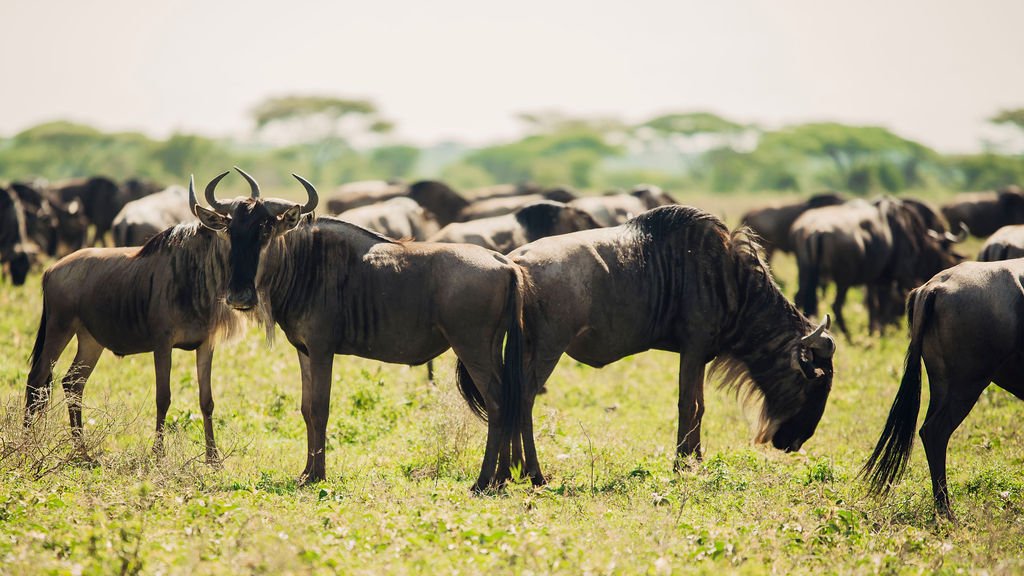
Imagine a landscape where 8,000 new lives begin every single day. This reality defines the Serengeti calving season in Tanzania, where half a million wildebeest are born within a brief three-week window. While most recognize the Great Migration for its dusty river crossings, the cycle actually ignites on the nutrient-rich plains of the Ndutu region. Here, straddling the southern Serengeti and Ngorongoro Conservation Area, the herds gather to drop their young in a massive, synchronized survival strategy.
Between January and March, seasonal rains transform these usually dry savannahs into a lush landscape known as the “Emerald Season.” Safari guides often highlight this period for its distinct advantages: vibrant photography conditions and significantly fewer crowds compared to the peak tourist months. As the short rains nourish the volcanic soil, the stage is set for the best time to see wildebeest birthing in the wild.
The Secret Ingredient in the Soil: Why Wildebeest Migration Paths Are Written in Volcanic Ash
It seems unlikely that a massive biological event would depend entirely on geology, yet the Great Migration follows a map drawn by ancient volcanoes. Millions of years ago, eruptions from the Ngorongoro highlands blanketed the southern landscape in ash, creating the nutrient-rich soil of the volcanic plains. This unique foundation supports a specific type of vegetation that acts like a natural superfood. The herds don’t arrive here by accident; they instinctively seek out this short, sweet grass because it offers the highest energy concentration exactly when they need it most.
For a nursing mother, this diet is strictly a matter of survival. The short grass plains of the Serengeti ecosystem are packed with calcium and phosphorus, which are the essential building blocks for producing milk and growing the skeletons of newborn calves. This nutritional necessity anchors the herds to the border of the Ngorongoro Conservation Area during the rainy season. Once the calves absorb enough minerals to stand and run, the migratory patterns of the Great Migration herds will push them north, but first, they must weather the chaos of mass birth.
The ‘Buffet’ Survival Strategy: Why Having 500,000 Babies at Once Saves the Herd
Nature employs a brutal but effective numbers game to protect the next generation. Through a synchronized birthing survival strategy, the herds flood the plains with newborns in a concentrated timeframe. This creates “predator satiation,” which functions like an unlimited buffet where the customers simply cannot eat everything served. Even with lions and hyenas patrolling the perimeter, the sheer volume of simultaneous births ensures that while some calves are lost, the predators get too full to wipe out the generation.
This period is unique because the herds finally stop moving. Unlike the high-speed drama of the northern migration, the southern calving season focuses on stability.
- Pace: Herds remain stationary to graze rather than trekking constantly.
- Risk: Danger comes from circling big cats, not crocodile-filled currents.
- Visibility: The treeless landscape leaves predators nowhere to hide.
However, remaining stationary on the plains only works if the newborns can run almost immediately after hitting the ground.
From Birth to Full Gallop in Minutes: The Incredible Biology of a Precocial Calf
While human infants take a year to master their first shaky steps, a wildebeest calf doesn’t have that luxury. These animals are precocial, a biological term meaning they are born in an advanced state of development with their eyes open and muscles ready to fire. Within ten minutes of hitting the grass, a calf struggles to its feet; within an hour, it can join the herd at a full run. This rapid coordination is an evolutionary necessity, as the flat terrain offers absolutely no cover for a helpless newborn.
The mother plays a critical, unsentimental role in this process. Instead of letting her newborn rest, she nudges it constantly, forcing it to stand and bond with her through scent before chaos ensues. For travelers photographing newborn wildlife in the wild, this is a moment of high tension. The scent of birth fluids acts like a dinner bell across the savannah, guaranteeing that predator sightings in Ndutu plains will spike as lions and cheetahs close in to test the new generation’s speed.
Predators on the Prowl: Witnessing the High-Stakes Drama of the Ndutu Plains
The concentration of vulnerable life turns this region into a hotspot for Africa’s most efficient hunters. On a Southern Serengeti wildebeest migration map, the Ndutu plains might look like empty space, but in February, they hold one of the continent’s highest densities of apex predators. The lack of tall grass creates a hunting arena that favors raw speed over ambush. While leopards often struggle here without tree cover to hide in, cheetahs thrive on these flat “race tracks,” and large lion prides use the open terrain to coordinate complex flanking maneuvers against the herds.
For visitors, this lack of cover guarantees that predator sightings in Ndutu plains are unfiltered. Unlike the northern Serengeti where tall grass often obscures the action, the short-grass ecosystem offers front-row seats to high-speed chases. However, this visibility demands responsibility; ethical guides know that crowding a hunt can ruin a predator’s attempt or separate a mother from her calf. Knowing which predators follow the wildebeest migration transforms a chaotic scene into a calculated display of survival strategy, a daily drama that is best appreciated from the right camp location.
Safari Logistics: Choosing Between Mobile Tented Camps and Luxury Lodges in the Southern Serengeti
To wake up within earshot of the herds, your choice of base matters. When planning a safari to the Ngorongoro Conservation Area, the main decision lies between Ndutu luxury camps vs mobile tented camps. Mobile camps are semi-permanent structures that move seasonally to follow the migration, placing you directly in the calving grounds to maximize viewing time. In contrast, permanent lodges offer robust amenities and stone architecture but may require longer morning drives to reach the dense animal concentrations.
Embracing the “Green Season” means accepting a bit of weather in exchange for a better view. The rains transform dusty plains into vibrant emerald backdrops, offering photographers unmatched color contrast against the dark coats of the wildebeest. While there is no secret on how to avoid rain on a green season safari, showers are typically short and localized. The real hurdle is the mud; ensure your operator provides powerful 4×4 vehicles capable of navigating the slick volcanic soil.
- Mobile Tented Camps: Canvas walls, immersive nature sounds, “bush” showers, zero commute to wildlife.
- Luxury Lodges: Solid structures, swimming pools, climate control, focus on comfort over proximity.
Your Calving Season Roadmap: How to Witness the Great Migration’s Most Emotional Chapter
The calving season in Tanzania is more than a massive nursery; it is the engine room of the entire Serengeti ecosystem. The nutrient-rich grass here transforms into the muscle and stamina required for the upcoming Tanzania animal migration. This biological reality shifts the view from simply admiring cute newborns to respecting the biological feat occurring before you, the survival of these calves dictates the success of the grueling 800-kilometer trek north.
To see this phenomenon, target the window between late January and March. One of the distinct benefits of visiting during the emerald season is witnessing nature at its most vulnerable and resilient simultaneously. By planning your journey for this specific time, you position yourself to watch not just a herd, but the future of the ecosystem taking its very first steps.